


Two days of conversation connected national policy with local action—and the people making recycling, reuse, and waste prevention work.
(Worldwide via Video Conference - August 5-6, 2026) Building a circular economy takes people who understand their communities, organizations willing to share what they have learned, and policies backed by practical systems for implementation. Those connections shaped the 35th National Recycling Congress, hosted virtually by the National Recycling Coalition on August 5–6, 2026.
Under the theme “From East to West, Circularity is Best,” the Congress brought together State Recycling Organizations, local government professionals, nonprofit leaders, advocates, and industry partners. Across discussions of plastics, producer responsibility, food recovery, fundraising, and community engagement, speakers returned to a shared challenge: how to turn knowledge and good intentions into lasting change.
Day One opened with Ruth Abbe of Zero Waste USA, whose keynote helped frame the broader conversation around waste prevention, reuse, and the design of zero waste systems. That perspective carried through the Congress as participants considered how decisions made before a product reaches the recycling bin influence everything that follows.
Jordan Harvill’s keynote on environmental justice and Native communities brought questions of responsibility and representation into focus. Drawing on Indigenous perspectives, Harvill discussed redistribution, regeneration, respect, and reciprocity as principles for community life and decision-making. His remarks asked participants to consider whose knowledge shapes environmental solutions, who bears the consequences of existing systems, and how communities can build the power to shape their futures.
For recycling professionals, the message had practical implications: involve people in designing the systems that affect them, recognize their relationships with land and place, and make community well-being central to the work.
The State Recycling Organization fireside chats showed how those relationships develop within the profession. Tracie Bills of the California Resource Recovery Association and Melissa Young of NYSAR3 discussed mentorship, technical councils, university partnerships, and opportunities to prepare new leaders. Young highlighted a student stewardship program that combines training with paid community projects, offering a concrete example of how education can become a pathway into the field.
Their conversation also raised opportunities for stronger national connections—from sharing specialized expertise to making it easier for members to learn across state lines. Organizations with small staffs and active volunteer boards often face similar challenges. Access to a colleague’s experience can help them move a project forward.
Extended Producer Responsibility, or EPR, connected several sessions across both days. In Women in Circularity: Advancing EPR, MaryEllen Etienne and Andriana Kontovrakis explored the expanding role of producer responsibility and the work required to implement it. Kontovrakis emphasized listening to producers and regulators, explaining unfamiliar requirements, and helping stakeholders understand one another’s operational constraints.
Marta Keane of The Battery Network brought that discussion into everyday recycling operations with a presentation on battery EPR and collection safety. As batteries appear in more products, programs must adapt their collection practices and public education. Her presentation connected material recovery with the need to protect workers, facilities, and communities.
Communication received its own attention during a fireside chat featuring the Carolina Recycling Association and Bobbi Barnowski of the Tribal Solid Waste Advisory Network. Speakers emphasized accessible language, welcoming questions, and using multiple ways to reach residents. Barnowski described the realities of serving rural tribal communities, where distance, infrastructure, and local relationships shape what a program can accomplish.
These discussions helped explain the direction NRC leaders described during the member meeting as “NRC 2.0.” President Teresa Bradley and Executive Director Charles Kamenides outlined priorities that included stronger affiliate connections, workforce development, transparency, and a focus on human and environmental health. They also discussed opportunities for technical exchanges, webinars, and ongoing conversations that respond to members’ needs.
Day Two began with the organizational resources needed to sustain that work. Firespring’s Kiersten Hill offered practical guidance on fundraising, emphasizing preparation, a clear case for support, and the role of board members. Her presentation encouraged organizations to connect fundraising requests with the value they bring to communities and to build trust well before making an ask.
The NRC Plastics Committee Report then examined plastics across their full life cycle. Gary Liss and Jay Bassett discussed a board-approved report informed by 241 survey responses and its recommendation to develop a comprehensive plastics policy.
The discussion covered source reduction, reuse and refill infrastructure, producer accountability, public health, and environmental justice. Speakers also examined recycling definitions and mass balance accounting, underscoring how those choices affect public claims, investment, and confidence in recycling. The report’s recommendations established a foundation for further policy development and member participation.
EPR in the Heartland brought policy implementation into sharper focus. Kent Holm and Matthew Howe described Nebraska’s experience advancing battery producer responsibility, including the importance of public safety and costs borne by local governments. Their account showed how concerns about fires and damaged infrastructure can create common ground among stakeholders.
They also emphasized the persistence required to build understanding. Retailers, scrap recyclers, manufacturers, and other affected groups needed opportunities to ask questions and explain their concerns. Keeping supporters, neutral parties, and opponents informed helped the conversation move forward.
Recycle Colorado’s Brandy Moe reinforced the value of sharing those experiences during the membership and engagement discussion. States are continually testing policies, funding approaches, and education campaigns. More intentional exchange among organizations can help others learn from that work while adapting it to local conditions.
Food waste reduction and recovery offered another example of connecting strategy with implementation. Angel Veza of ReFED discussed using data to identify where food waste occurs and which solutions fit an organization’s objectives. Her presentation addressed prevention, food rescue, and organics recycling, including opportunities to support composting and reduce methane emissions.
Paige Sullivan of Copia focused on the systems that make edible food recovery dependable: identifying surplus, matching it with a nonprofit, arranging transportation, confirming delivery, and documenting results. Together, the presentations showed how data, funding, and reliable logistics can help organizations make food recovery part of routine operations.
The Congress also celebrated the people already putting these ideas into practice. Sixteen honorees were recognized during the NRC Awards Presentation, hosted by Christine Kiourtsis and Mehreen Chowdhury. Highlights included Nina Butler of Stina Inc., recipient of the Lifetime Achievement in Recycling Award; Ayodeji Oluwalana of Penn State University, named Recycler of the Year; and Juan Martinez of Salt Lake City International Airport, recognized for emerging leadership. Their work spanned recycling data, campus waste reduction, composting infrastructure, and airport glass recovery. Meet the 2026 NRC award recipients.
The final sessions returned to the importance of place. Adrian Hernandez of the State of Texas Association for Recycling and Tony Rios of Puerto Rico discussed infrastructure, transportation, end markets, and opportunities for shared advocacy. Their exchange illustrated why national collaboration must leave room for different local needs.
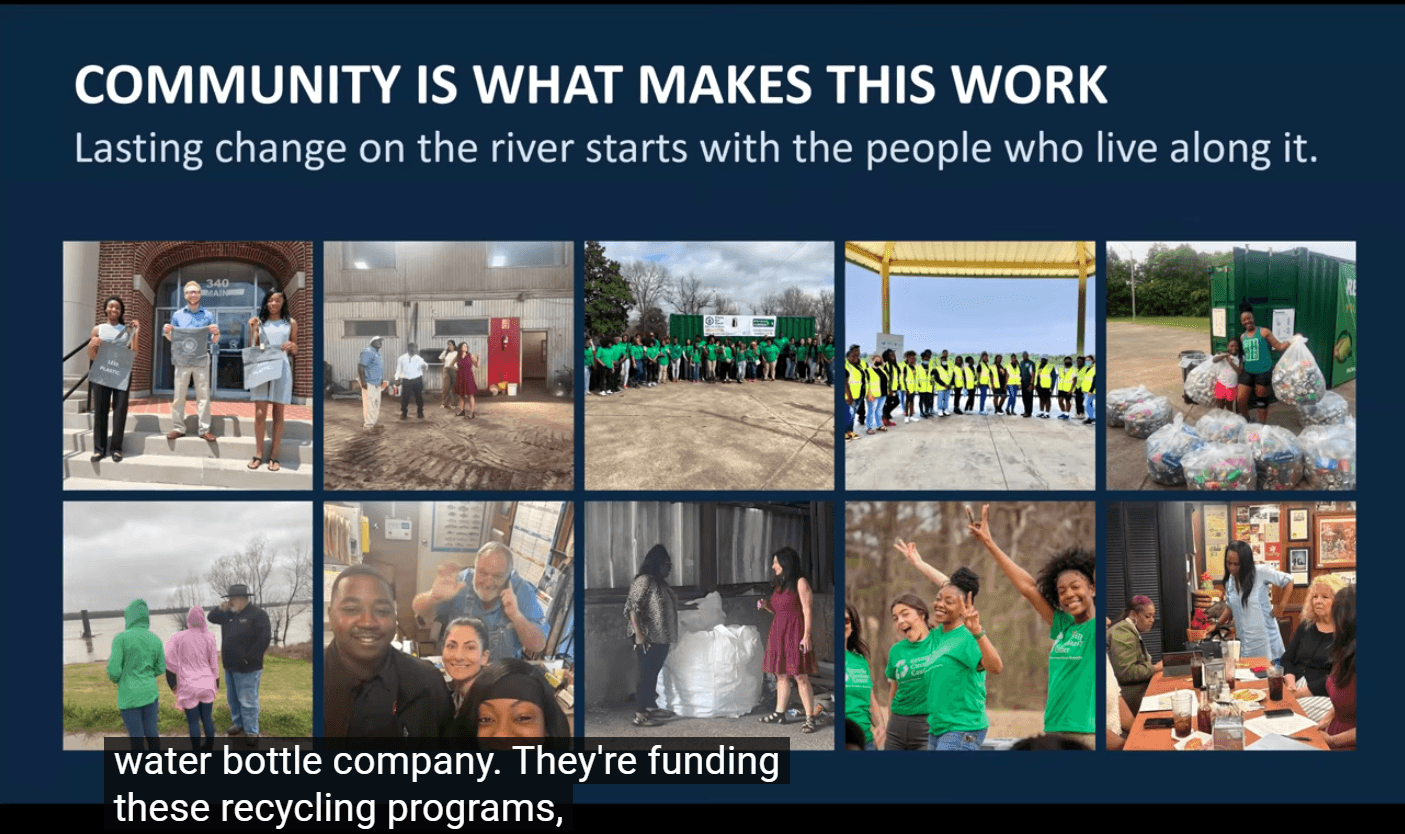
Closing keynote speaker Jenny Wendt of the MidAmerica Clean Future Alliance made that principle tangible through examples from the Mississippi River corridor. She described helping communities build recycling programs around available buildings, equipment, nearby markets, and relationships developed over time. Starting with manageable collection efforts—and listening to what residents and local officials wanted—created opportunities to grow.
In his closing reflections, NRC Board Chair Jay Bassett encouraged participants to recognize the knowledge and resources already present in communities. That invitation extended beyond the Congress: keep listening, share experience, and use the coalition’s connections to support the next practical step.
Thank you to the speakers, moderators, award recipients, sponsors, volunteers, planning team, and participants who made the 2026 Congress possible. The conversations continue through NRC’s members and affiliates as they bring these ideas into their communities.
Revisit the Congress and share the discussions with your colleagues: Watch Day One and Watch Day Two.