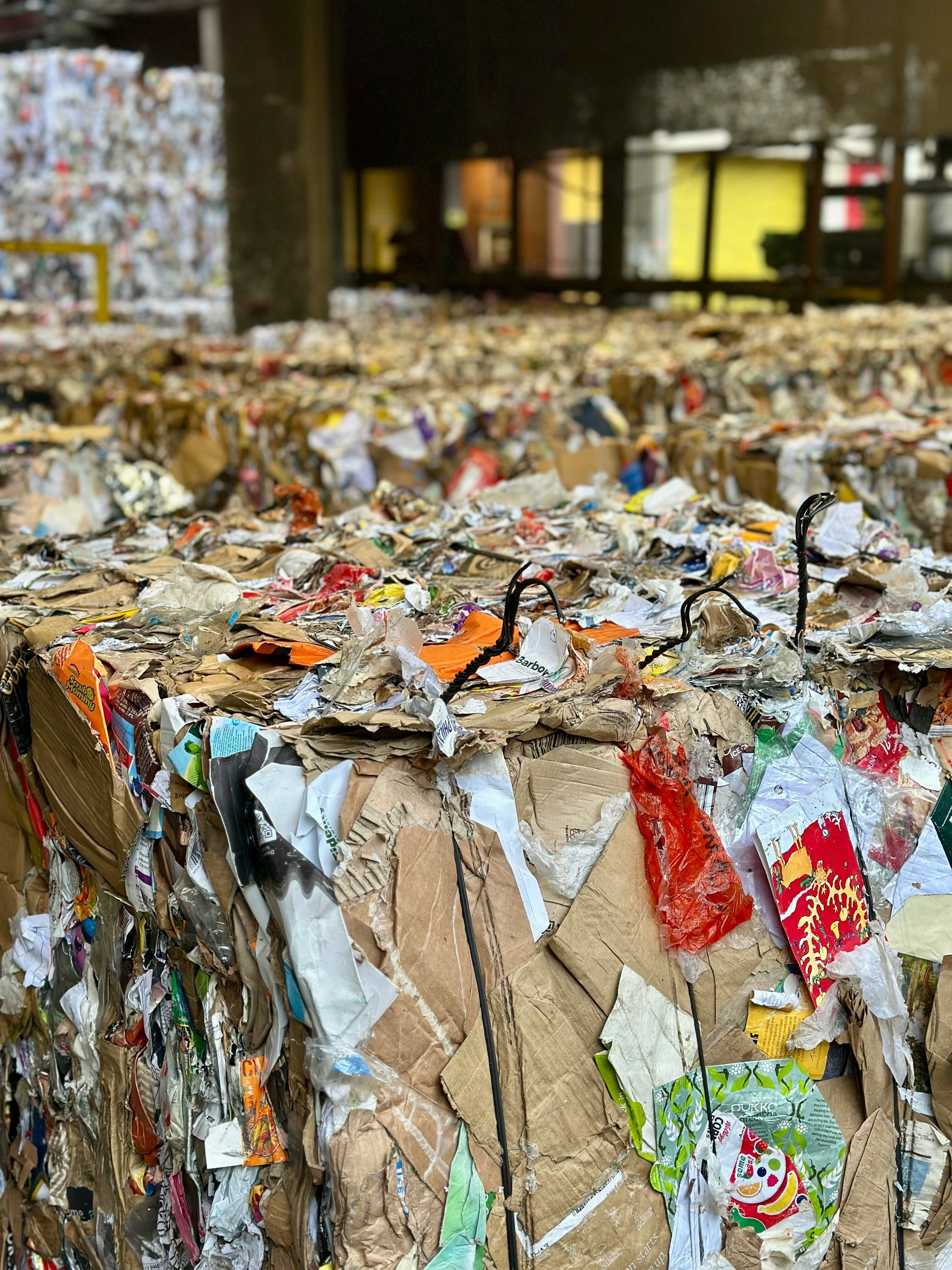
The U.S. Green Building Council’s latest impact report, The Zero Waste Blueprint, tackles one of the most urgent challenges of our time—the global waste crisis—and highlights how the built environment can lead the way toward circularity.
The report demonstrates how the U.S. Green Building Council's (USGBC) Leadership in Energy and Environmental Design (LEED) and Total Resource Use and Efficiency (TRUE) certification programs are transforming buildings, cities, and organizations from waste generators into resource re-generators. Together, these programs have helped divert millions of tons of material from landfills, proving that near-zero waste is not only achievable but economically and socially beneficial.
Globally, the world produces over 3 billion tons of construction and demolition waste every year—enough to rebuild the Empire State Building more than 10,000 times. But within this challenge lies an enormous opportunity. By redefining waste as a resource in transition, the circular economy can unlock trillions in economic value, reduce emissions and resource depletion, and create meaningful social benefits—from local job creation to healthier, more resilient communities.
LEED and TRUE bring structure and accountability to this transformation
LEED integrates waste reduction and material reuse across design, construction, and operations—bringing measurable impact throughout a building’s entire life cycle. TRUE, the world’s leading zero waste certification system, helps facilities achieve 90%+ diversion rates by redesigning material flows and prioritizing prevention, reuse, and continuous improvement. Together, these frameworks show what’s possible when sustainability and verification go hand-in-hand. From San Francisco International Airport’s 90% C&D (construction & debris) diversion to Rochester School in Colombia earning both LEED Gold and TRUE Gold, the case studies in this report illustrate scalable pathways for waste reduction, community resilience, and systems change.
Achieving zero waste is a collaborative effort—it’s a systems journey that connects people, places and purpose. Through "The Zero Waste Blueprint", USGBC is helping project teams, cities and communities close the loop together and demonstrate that a circular future is within reach. And as part of the NRC network, we’re working together to advance this mission, share knowledge, foster innovation and champion the policies and practices that make zero waste possible.— MaryEllen Etienne, Director at U.S. Green Building Council, Creator of Women in Circularity, Board Member of National Recycling Coalition, Co-developer of TRUE.
Ultimately, The Zero Waste Blueprint reminds us that every building, business and city has a role to play. By shifting from waste management to resource optimization, we can build a future where waste is no longer a burden—but a catalyst for regeneration.
Want to learn more?
• USGBC's The Zero Waste Blueprint (https://www.usgbc.org/resources/zero-waste-blueprint)
• TRUE website (https://true.gbci.org/)
• Team contacts: In the Western U.S. (Pacific, Mountain, Southwest, Western Midwest) — Contact Stephanie Barger ([email protected])
In the Eastern U.S. (Northeast, Mid-Atlantic, Southeast, Eastern Midwest) — Contact Celeste McMickle ([email protected])