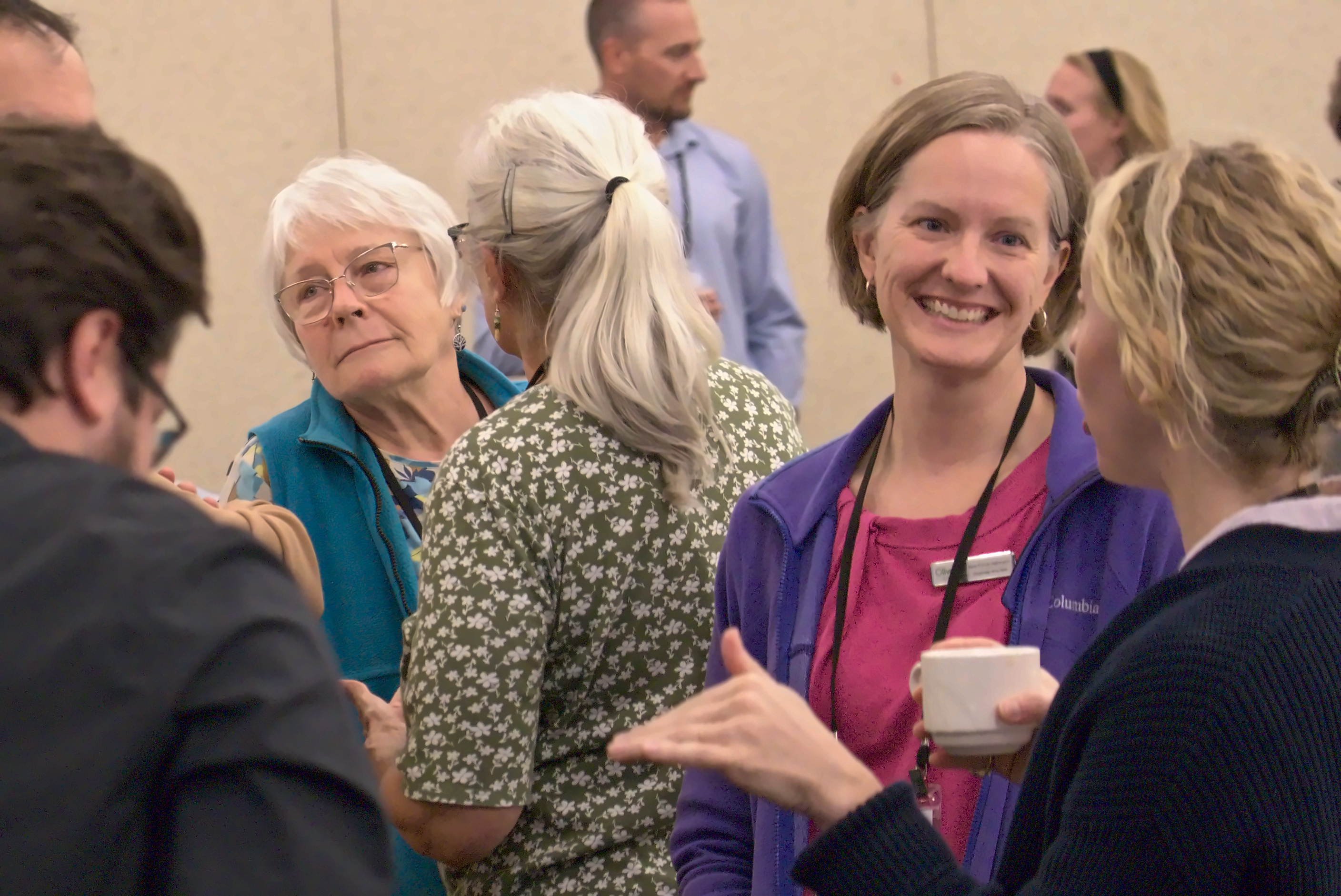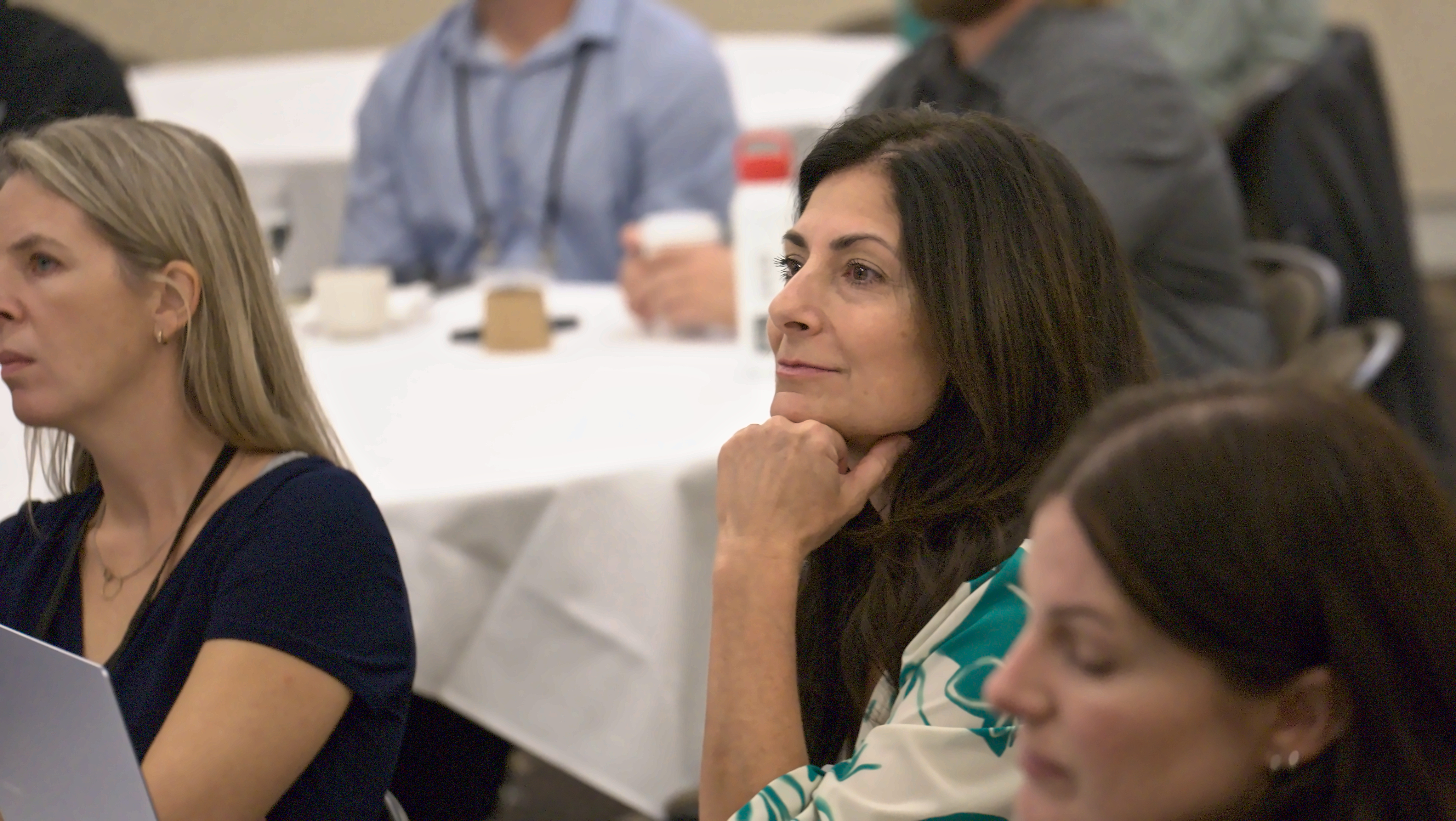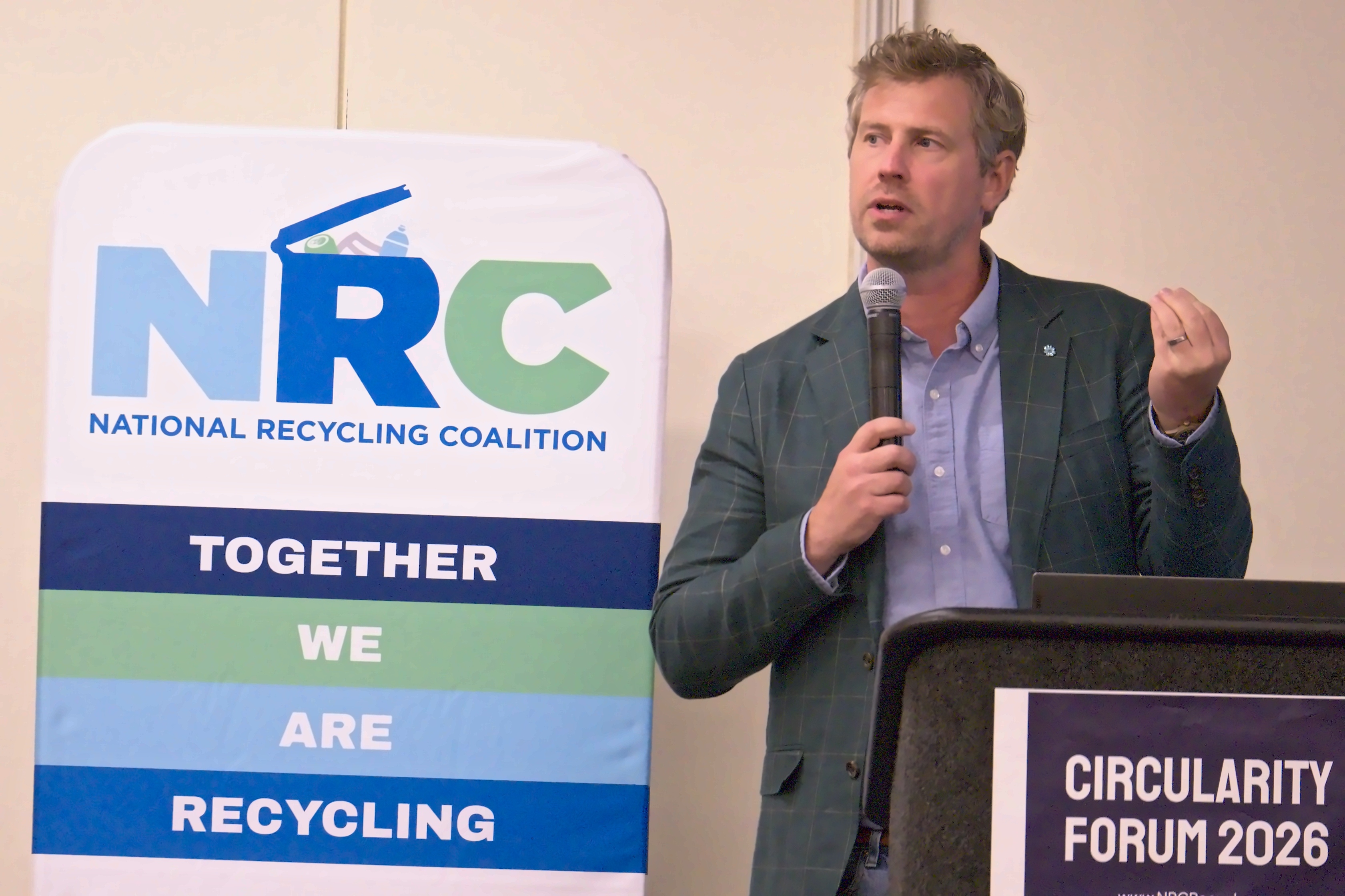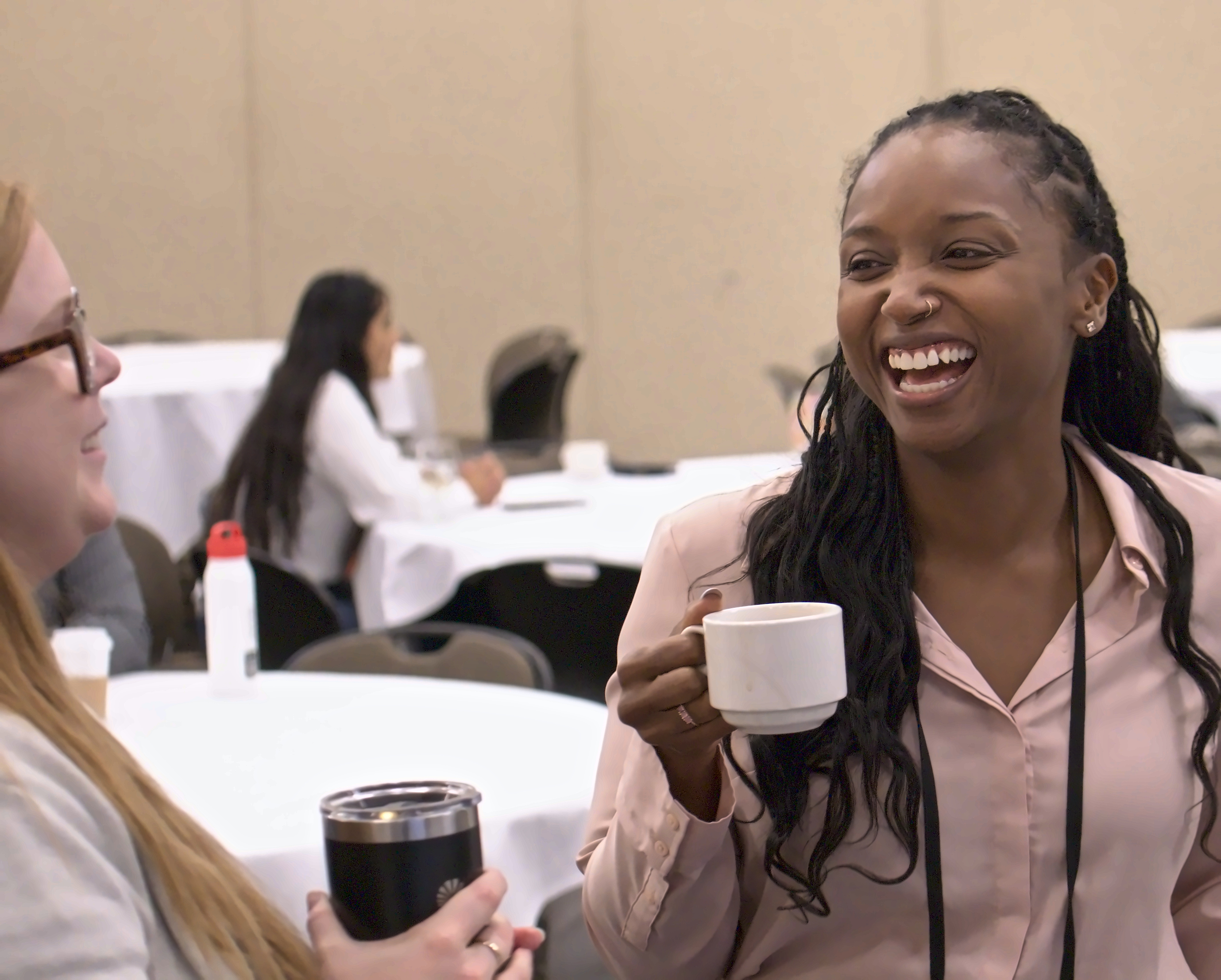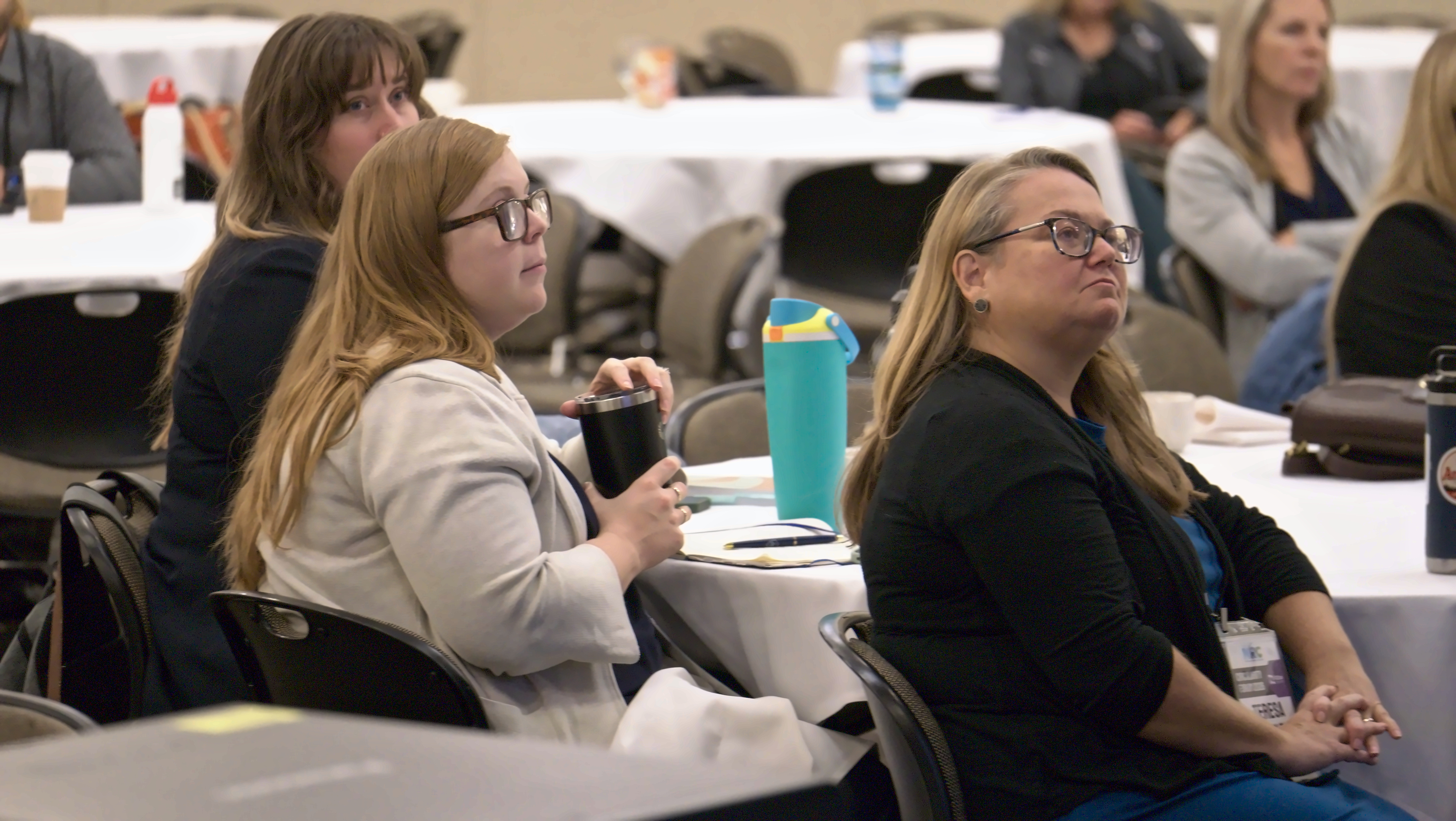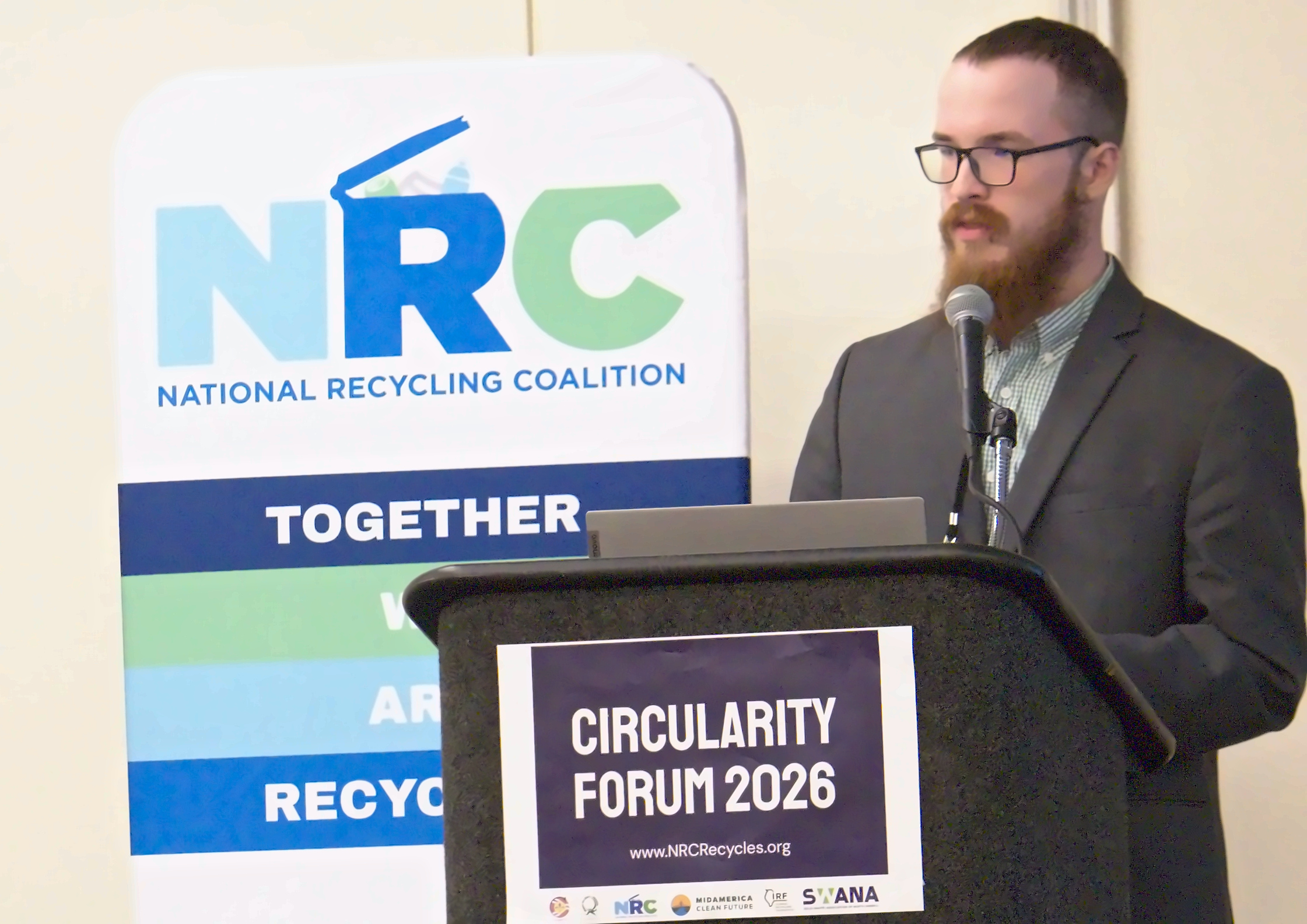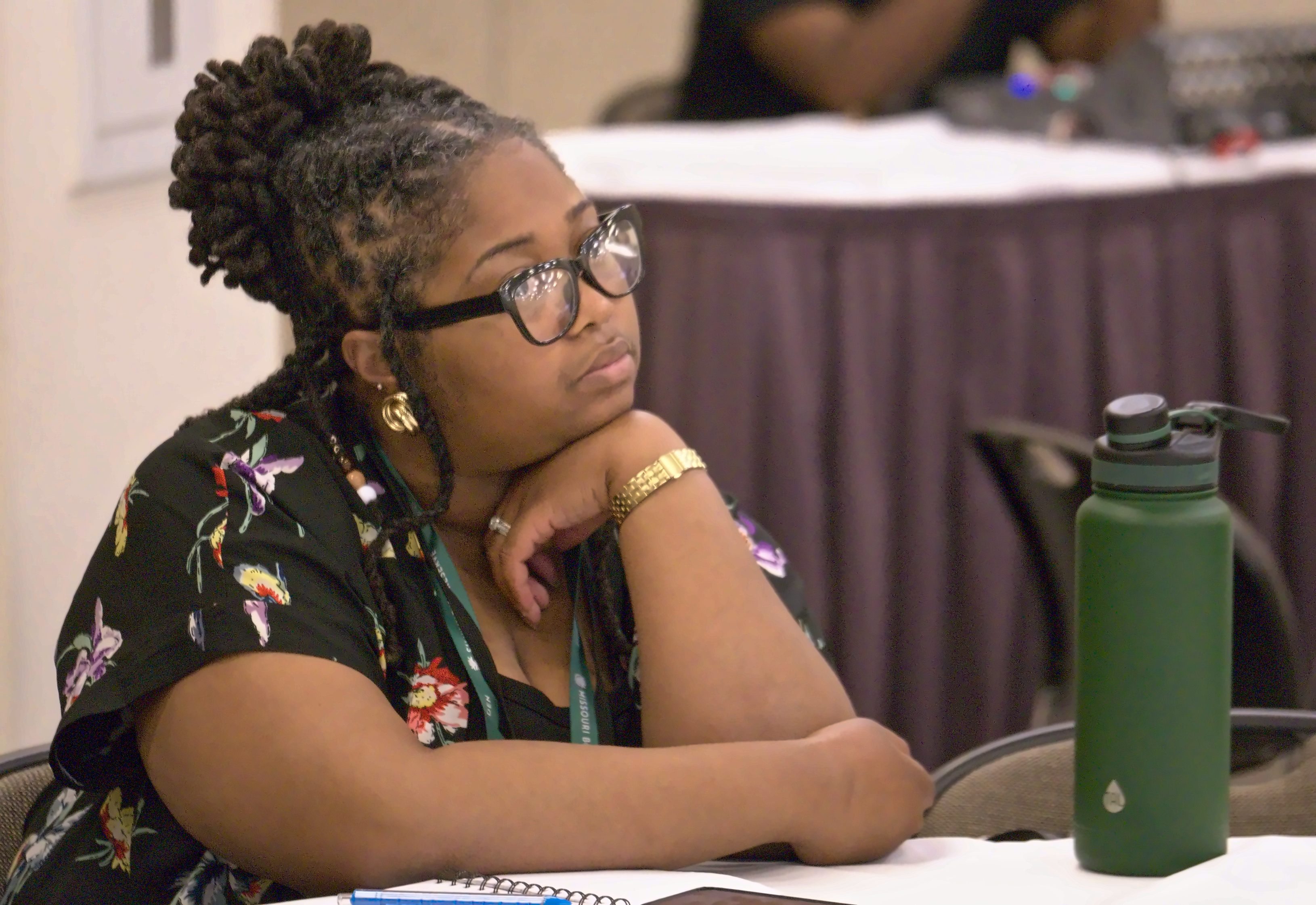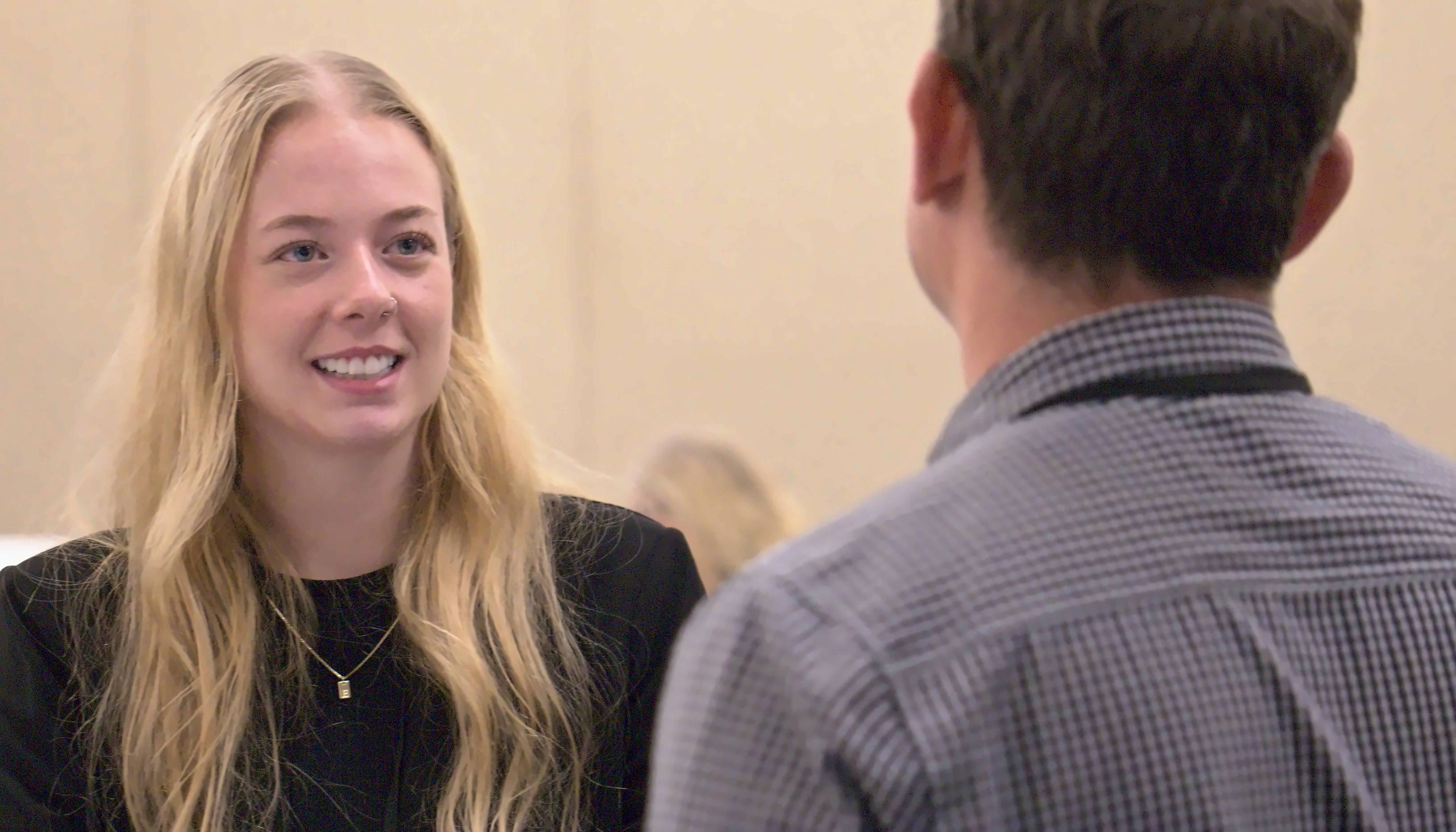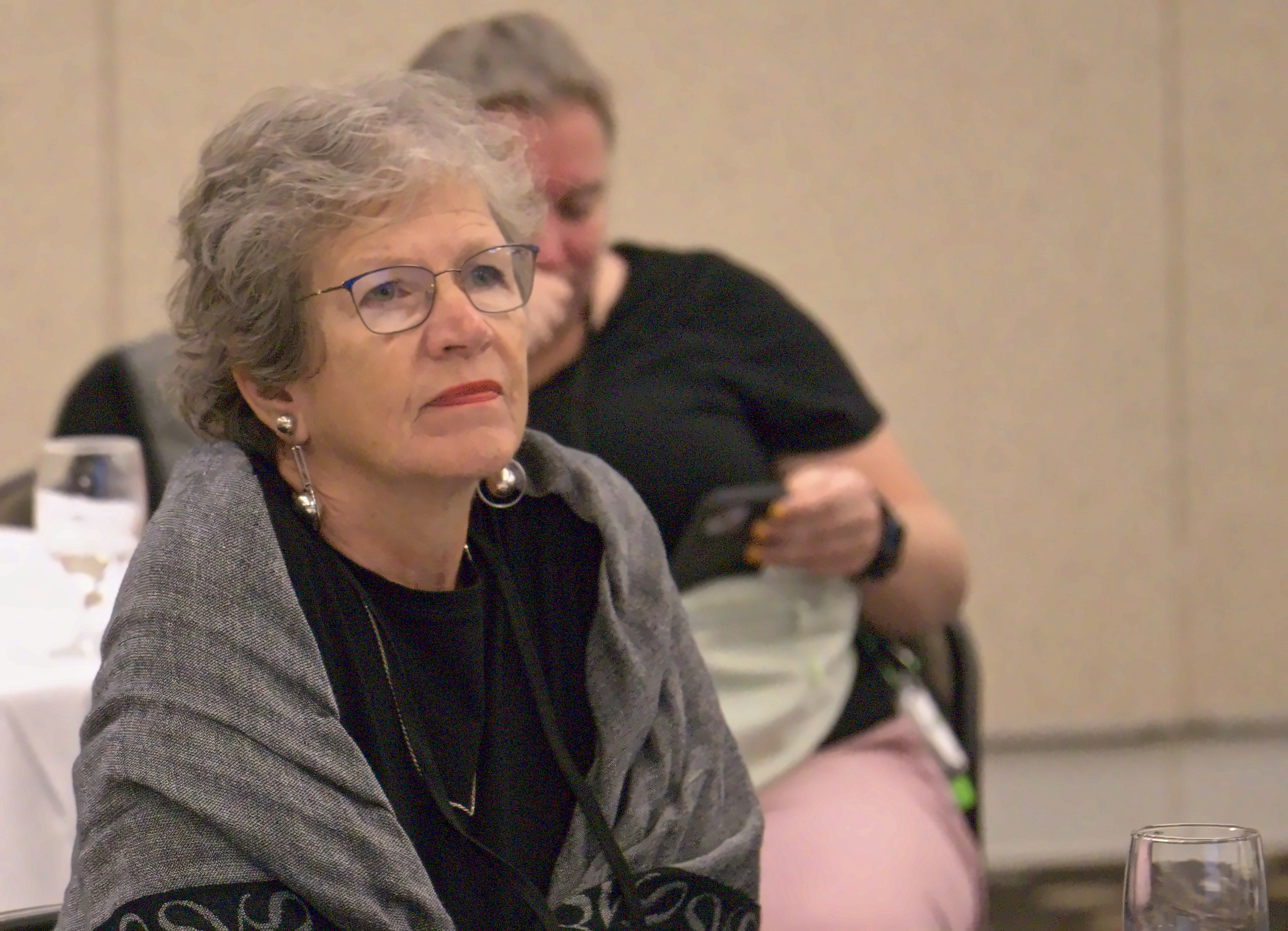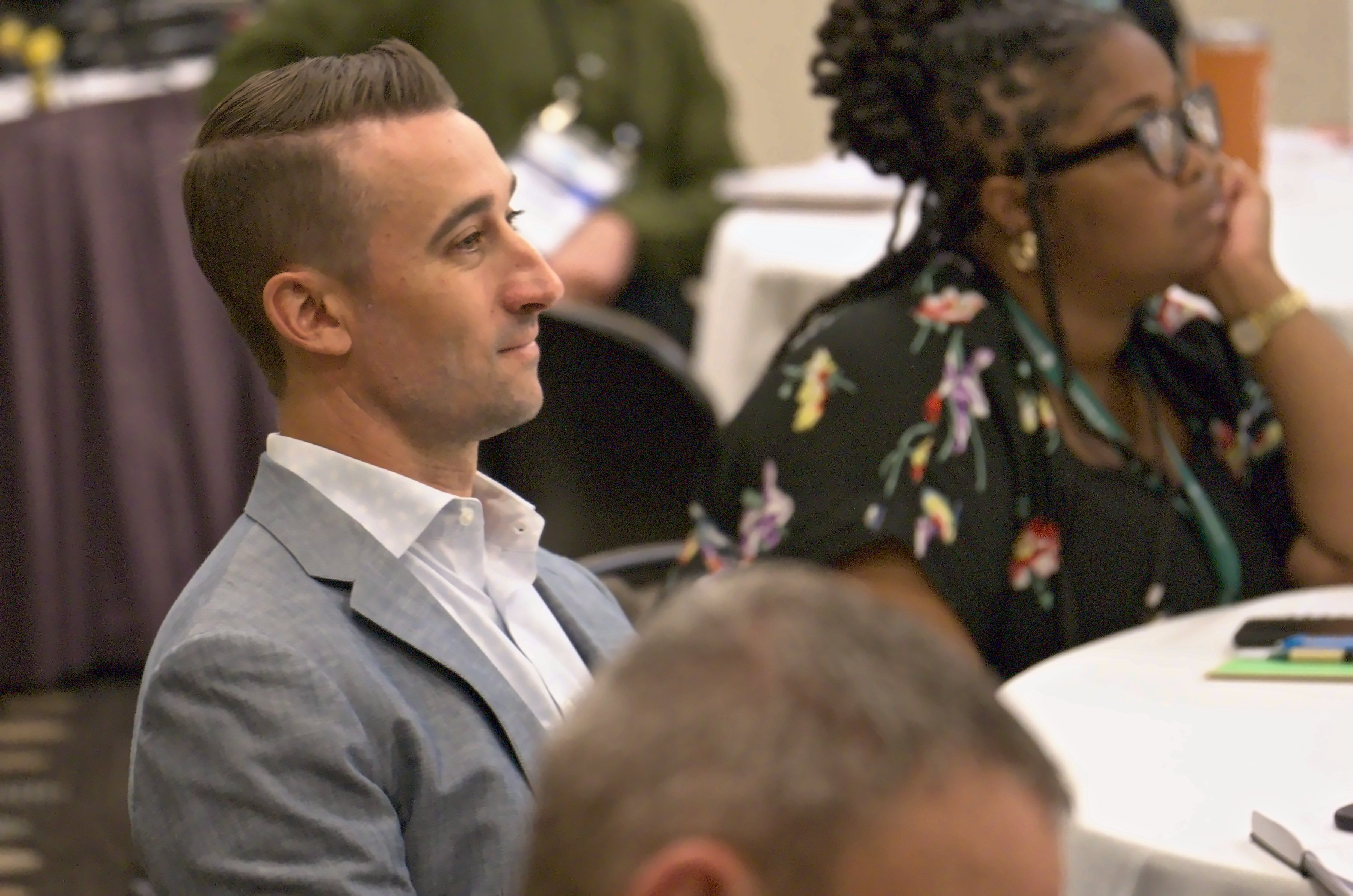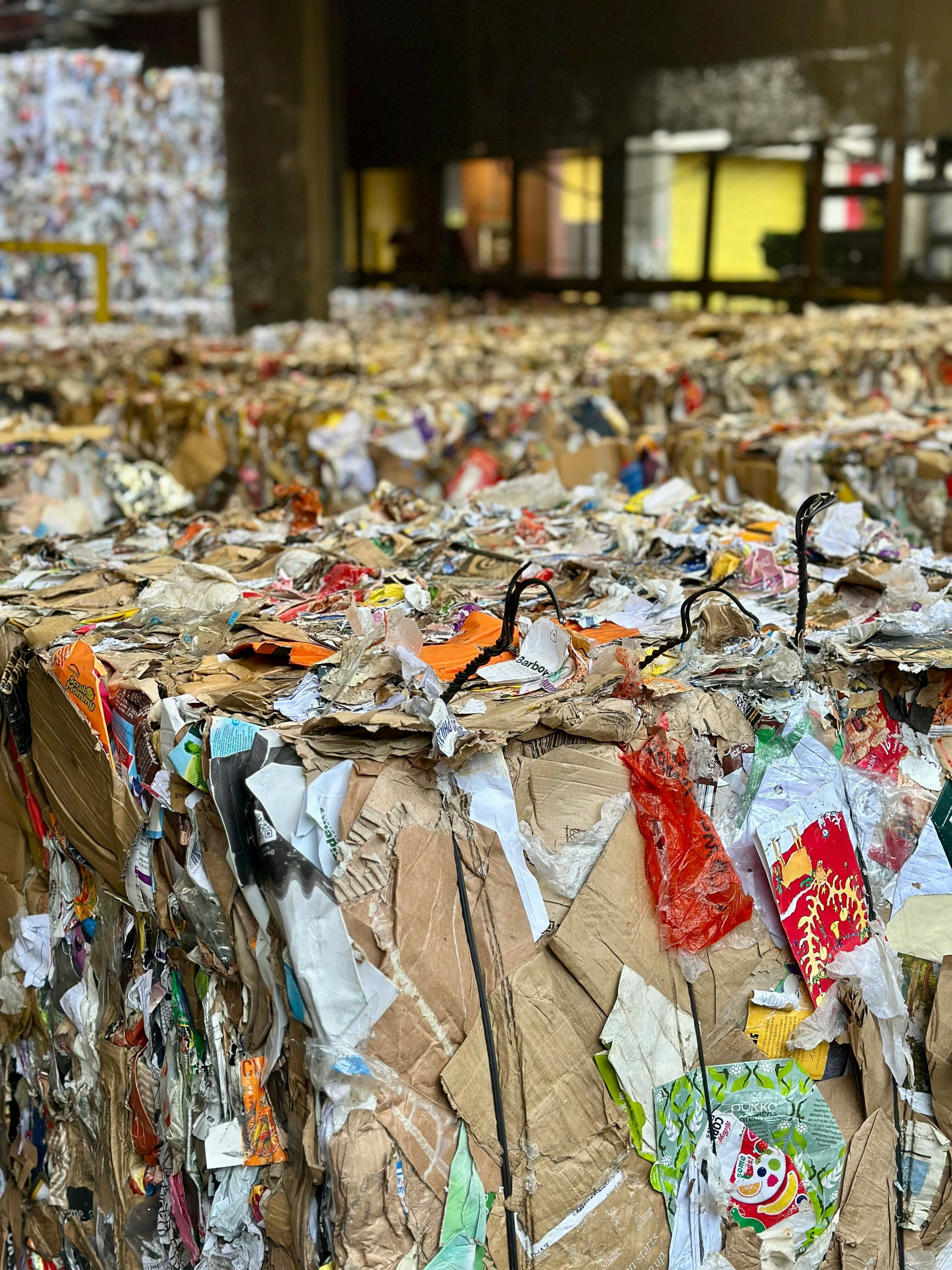
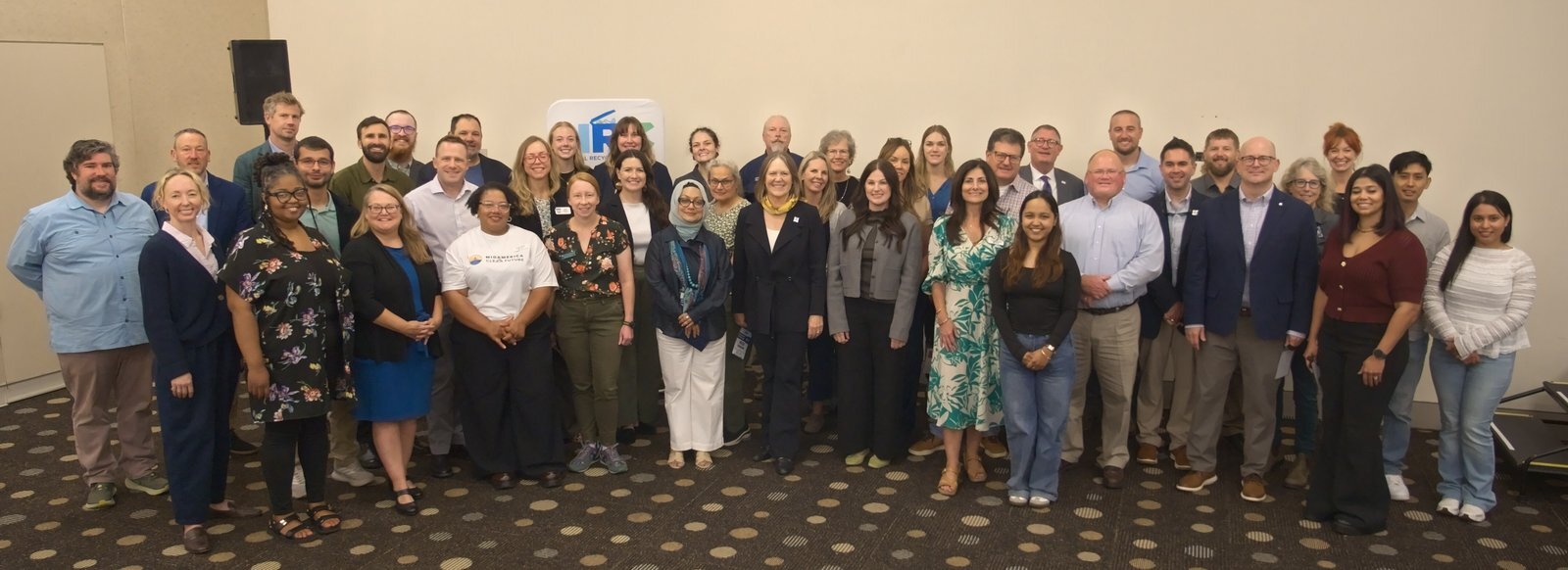
Every big show needs an opening act. On Monday, September 28, the day before SWANA’s RCon opened at America’s Center in St. Louis, the National Recycling Coalition had the honor.
NRC’s inaugural Circularity Forum was co-located with RCon and hosted with SWANA, CircularSTL, Race to Zero Waste, MidAmerica Clean Future Alliance (MACFA) and the Illinois Recycling Foundation.
That lineup was the point. Last year, keynoting NRC’s National Recycling Congress in Wichita, Heidi Sanborn challenged the field’s many small nonprofits to lock arms and pull in the same direction. The Forum was NRC’s answer: radical collaboration, delivered.
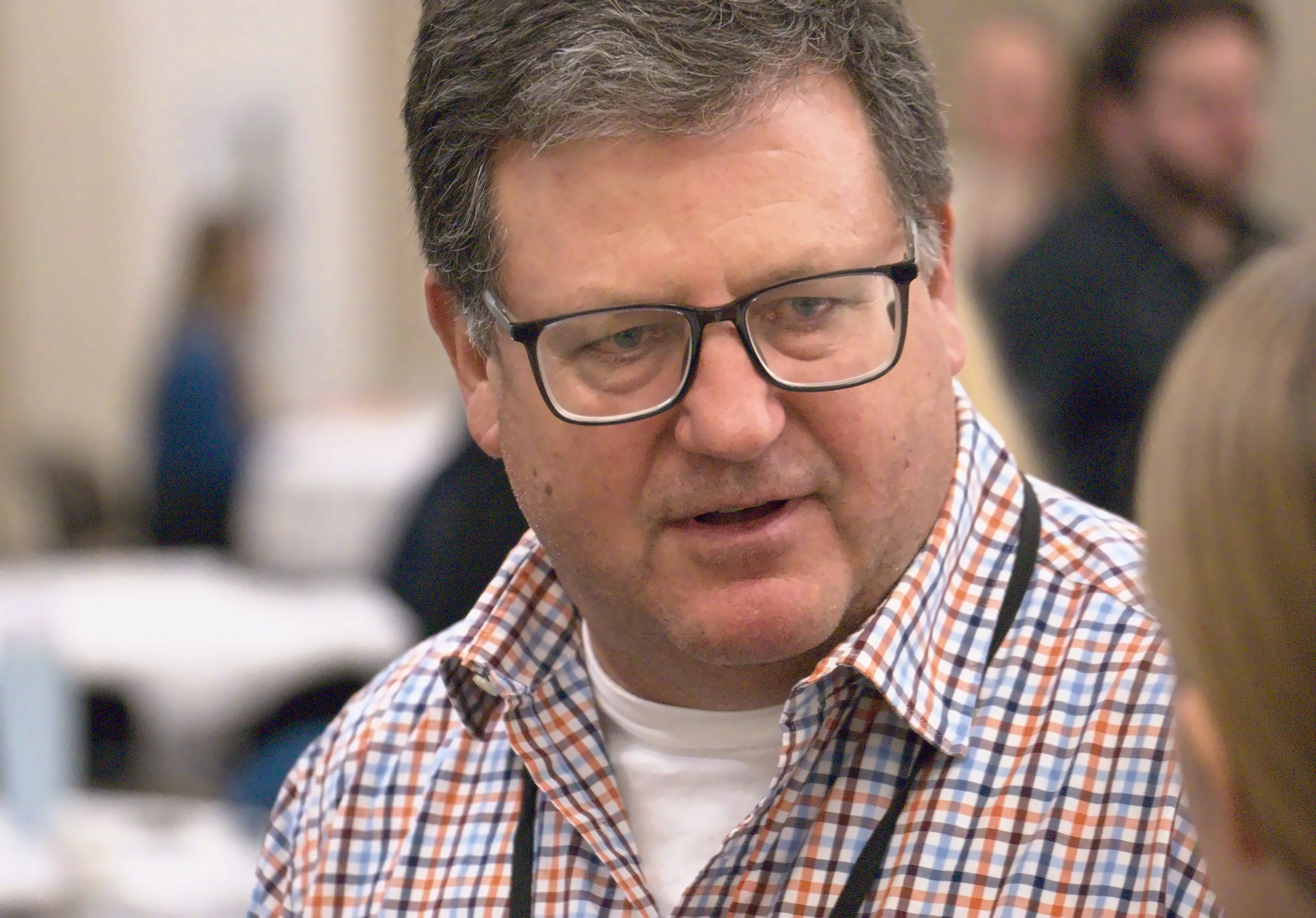
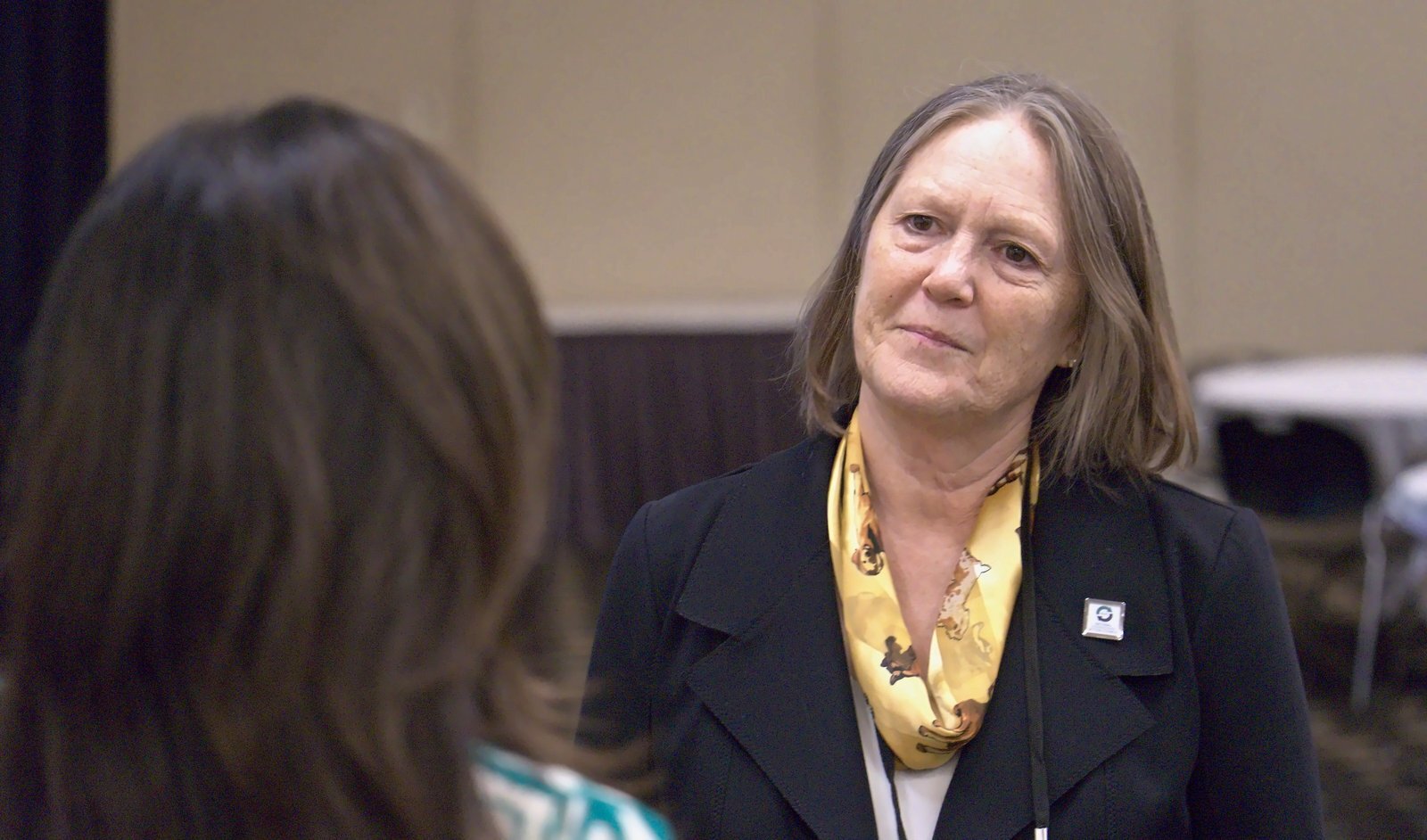
Before the doors opened, NRC’s Nathan Mihelich caught up with SWANA Acting CEO Carolyn Muller. “SWANA gave us more than a room. They let circularity open RCon week,” said Mihelich, NRC’s communications and development director. “All day, we heard the same thing from people who rarely end up in the same room: folks want to do the right thing. The job now is building systems that let them.”
NRC President Teresa Bradley has a favorite way to greet a room: “Good day, beautiful people.” By the end of the day, the saying fit.
Morning: “What do I do with this?”
Bradley opened wearing the several hats most nonprofit leaders will recognize: NRC president, founder and CEO of Race to Zero Waste, and co-founder of CircularSTL, the volunteer coalition behind much of the day’s local lineup. Carolyn Muller, SWANA’s acting CEO, explained that circularity factored into choosing St. Louis for RCon. When the convention center turned out to have recycling challenges, SWANA and its corporate partners stood up new recycling there, for every conference that follows. “Change can happen everywhere you go,” she said.
Brooke Butler, senior managing producer at Nine PBS, gave the first keynote. For three years her series What Do I Do with This? has chased one deceptively simple question. It started with Christmas trees, which St. Louis County Parks sinks in Spanish Lake as fish habitat. “Everything has a story after we’re done using it,” she said.
“Solutions need addresses. They don’t need another statistic.”
The series has taught her that households and industry see different things. “A couch sitting in a garage isn’t a waste management issue for a family,” she said. “It’s stress, it’s clutter.” Garages fill with dead batteries and old electronics because people don’t want to do the wrong thing, so they hold on, waiting for the right answer. Items dumped in St. Louis alleys, she argued, signal missing information and resources, not indifference.
Then she asked the question that echoed all day: “Why are consumers expected to become the experts in a system they didn’t create?” Her answer is local. “Solutions need addresses,” she said. “They don’t need another statistic.” The series is now used in more than 100 St. Louis schools. She closed with a challenge: “What would it look like if every person who wanted to do the right thing actually could?”
The room proved her point in Q&A. She named the show’s hardest item, physical media. Within minutes, an attendee named a local recycler that takes discs and tapes by the pound.
St. Louis shows its work
The first panel put St. Louis’s own practitioners onstage. Magdalen Sparrow, founder and executive director of Passback, moderated with her favorite line: “Systems change is a team sport.”
Caran Hanks, community engagement specialist at MACFA, described work in Mississippi Delta communities with little recycling infrastructure. It starts with listening. MACFA sent $4,000 to two communities hit by the May 2025 tornadoes for cleanup and beautification that discourages dumping, and its STL Tire Initiative with the Greenway Network is next. “The communities that we do work with, they really trust us,” Hanks said. Her advice: ignore a community’s bad reputation and see for yourself. “Those are the very communities that have the most tenacity and the most desire for change.”
Bailey Bruland, a sophomore at Principia Upper School, has run recycling competitions since last year’s circularity symposium, including one for snack wrappers by grade level. “While that may seem like a small thing, it got a lot of people involved who wouldn’t have cared about snack wrapper recycling otherwise,” she said. Her ask: think about how students can be part of your work.
Lynne Scott, who has taught at Principia School for 17 years and directs its stewardship, partnership and impact work, showed what that looks like at the curb. Principia once had waste pickup five days a week. Recycling cut it to three, and composting in dining cut it to one. Her tip for changing culture is to magnify the good. “Nobody wants to hear you’re doing a terrible job,” she said. “And yet we need behavior to change.”
Dr. Jess Watson, executive director of earthday365 and a CircularSTL co-founder, pointed to Dump the Dumpster Day with Energizer Park and St. Louis CITY SC, which diverted 10,000 pounds in a couple of hours this summer. Then she widened the frame. “I want us to all think bigger,” she said, urging attendees to press elected officials for the public recycling and composting residents deserve. The St. Louis recycling task force’s forthcoming recommendations include restoring alley recycling roll carts.
Everything has a second life
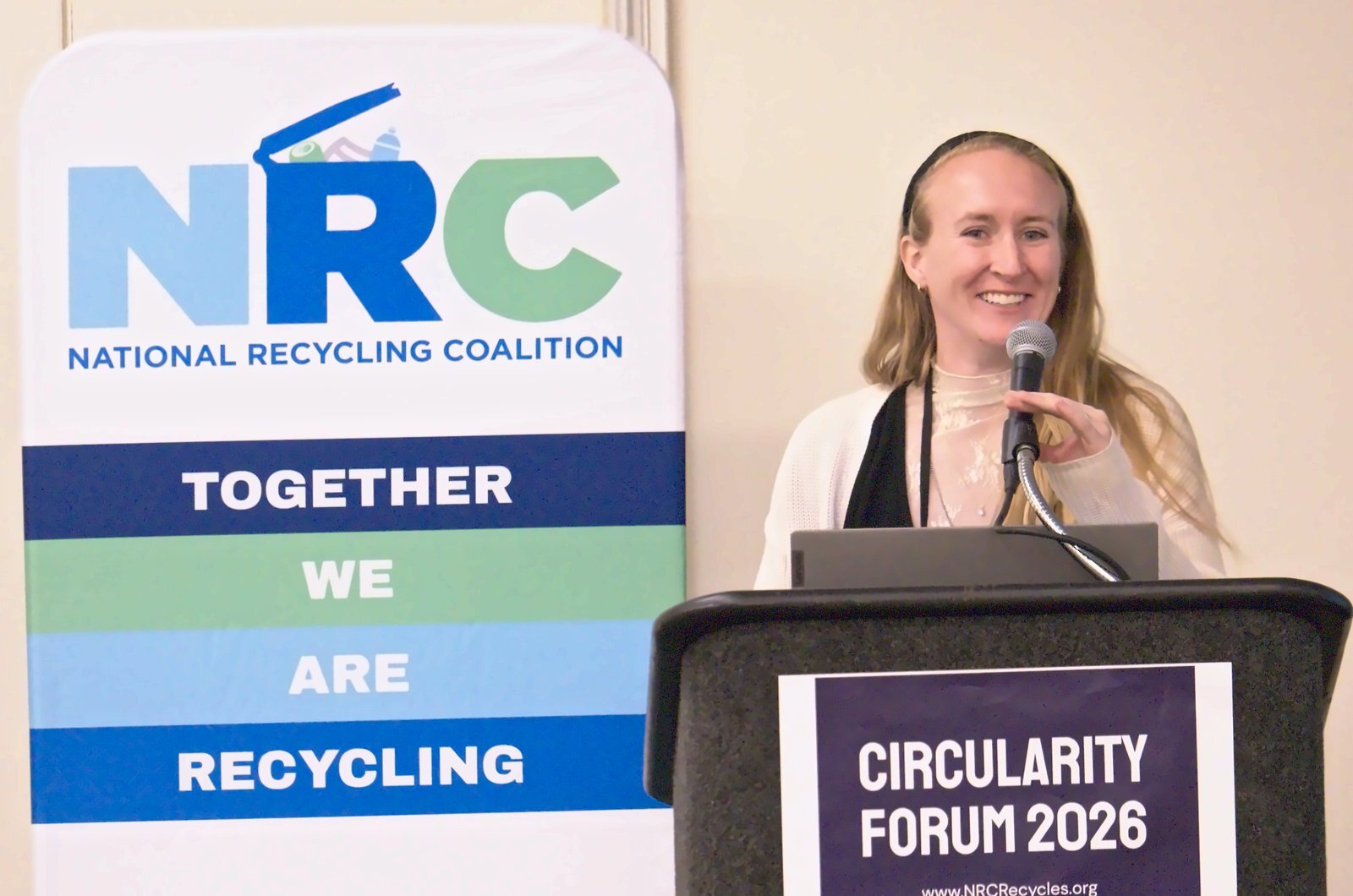
Sparrow returned for a lightning talk on Passback, which collects, refurbishes and redistributes the sports gear that piles up in storage rooms and lost-and-found bins, then responsibly recycles what’s left. In three years it has redistributed more than $500,000 in fair market value and recirculated more than 11 tons. St. Louis CITY SC alone moved about $34,000 in gear last season, and the St. Louis Cardinals sent more than 6,000 items. A $5,000 investment, Sparrow said, puts about $10,000 of gear into kids’ hands.
Cassie Hage, assistant director of sustainability at Washington University in St. Louis, described WashU’s portfolio approach to reuse: a move-out collection running about 15 years, an office-supply exchange, an internal marketplace, lab-supply swaps and reusable to-go boxes. Together they keep an average of 24 tons out of the landfill each year. Since 2022 WashU’s Circularity Center has run from about 3,500 square feet of warehouse space, and it charges for items. “I think assigning a monetary value helps people rein in their desire to get a bunch of stuff,” Hage said.
WashU junior Sean Henry shared a summer feasibility study for CircularSTL on a regional circularity hub. Residents need one drop-off point, because driving to five specialty recyclers across a fractured region isn’t realistic, and circular businesses need visibility.
The classroom and the bin
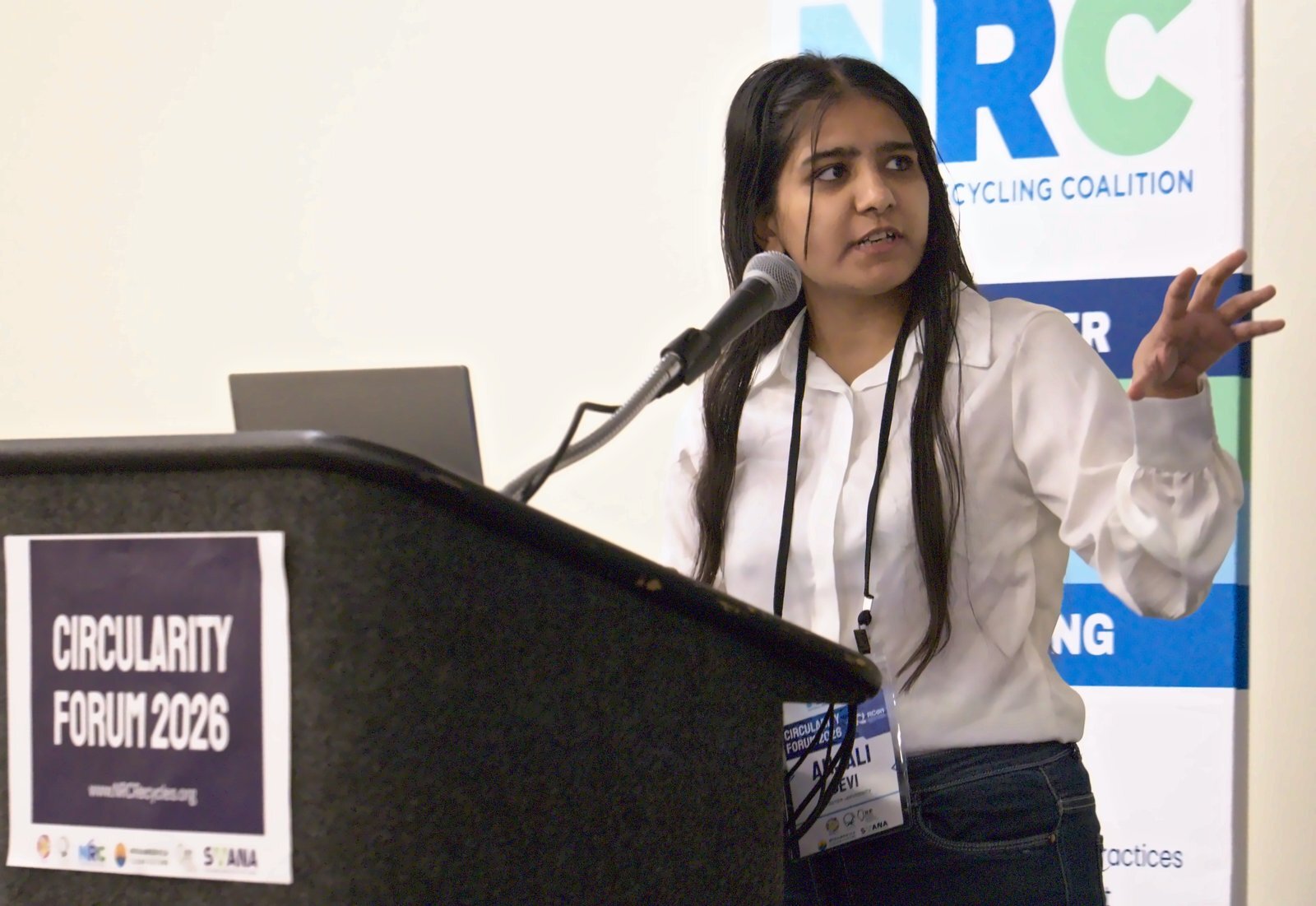
Webster University environmental management student Anjali Devi opened the academic block with photos from Haryana, India, where she grew up seeing mixed waste dumped in open lots. Her own village offered a counterexample: a dump site in 2018 became, by 2026, a playground planted with trees. In Missouri she expected recycling bins everywhere, but her apartment complex has a single dumpster. A field trip to a materials recovery facility changed her question, she said, from “Where does our waste go?” to “Where can its value go next?”
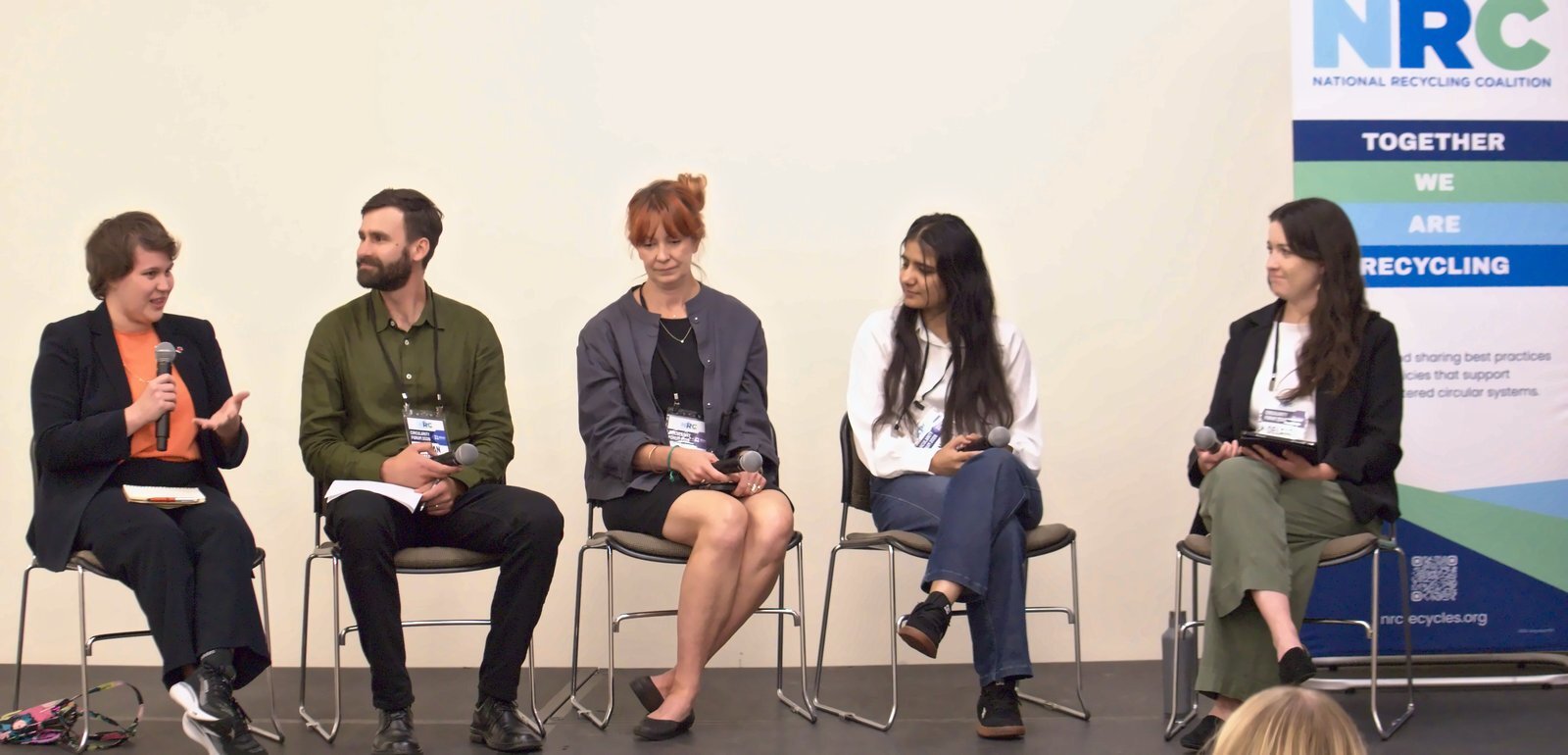
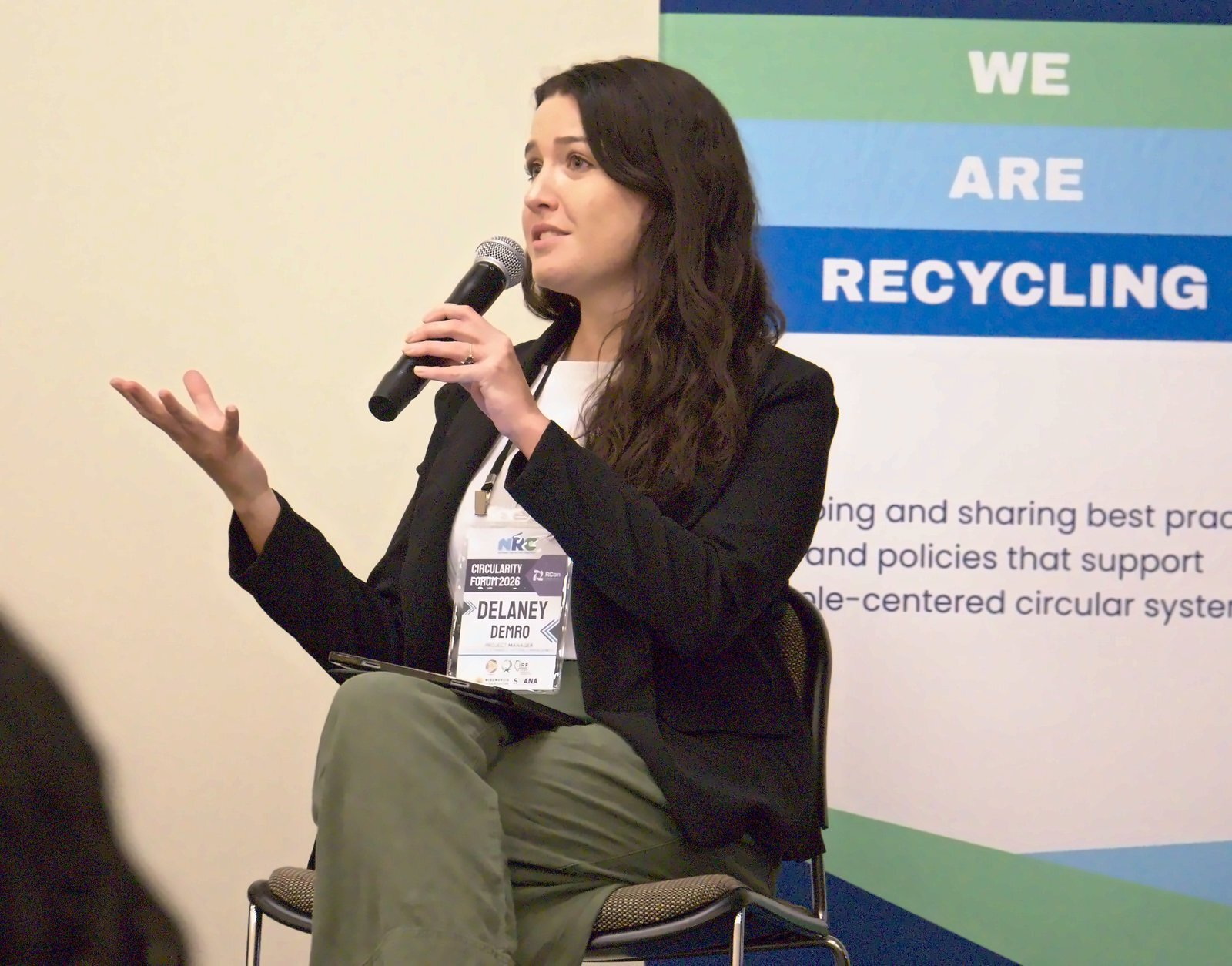
Delaney Demro, NRC’s secretary and a project manager at SUNY ESF’s Center for Sustainable Materials Management, then moderated a panel on campuses practicing what they teach.
Betsy Ruckman, zero waste coordinator at the University of Illinois Urbana-Champaign, scrapped a student pledge that read “I’ll use the bin.” “It’s not that people are not committed to sustainability,” she said. “It’s that the infrastructure is not there.” Until UIUC Athletics buys permanent bins, her team runs zero-waste tailgates with a Gator, a trailer, a bell and a quiz with prizes. “I imagine a world in which sustainability is easy,” she said, “in which doing the right thing is doing the easy thing.”
Kynan Witters Hicks is sustainability director at Principia College, which composts all of its pre- and post-consumer dining waste. His most effective tactic is low-tech: hiring a student to stand beside the bins at events. “It’s a lot more effective when you have students educate other students,” he said.
Dr. Katy Mike Smaistrla, who teaches in Webster’s environmental management program, once taught an environmental management class in a room with no recycling bin. “If I’m asking those students to take those steps,” she said, “I better make sure the systems are in place.” She and Ruckman agreed that programs can’t rest on student volunteers. No university asks student volunteers to run its fundraising, Ruckman noted. “I think sustainability should be no different.”
The twelve-second screw
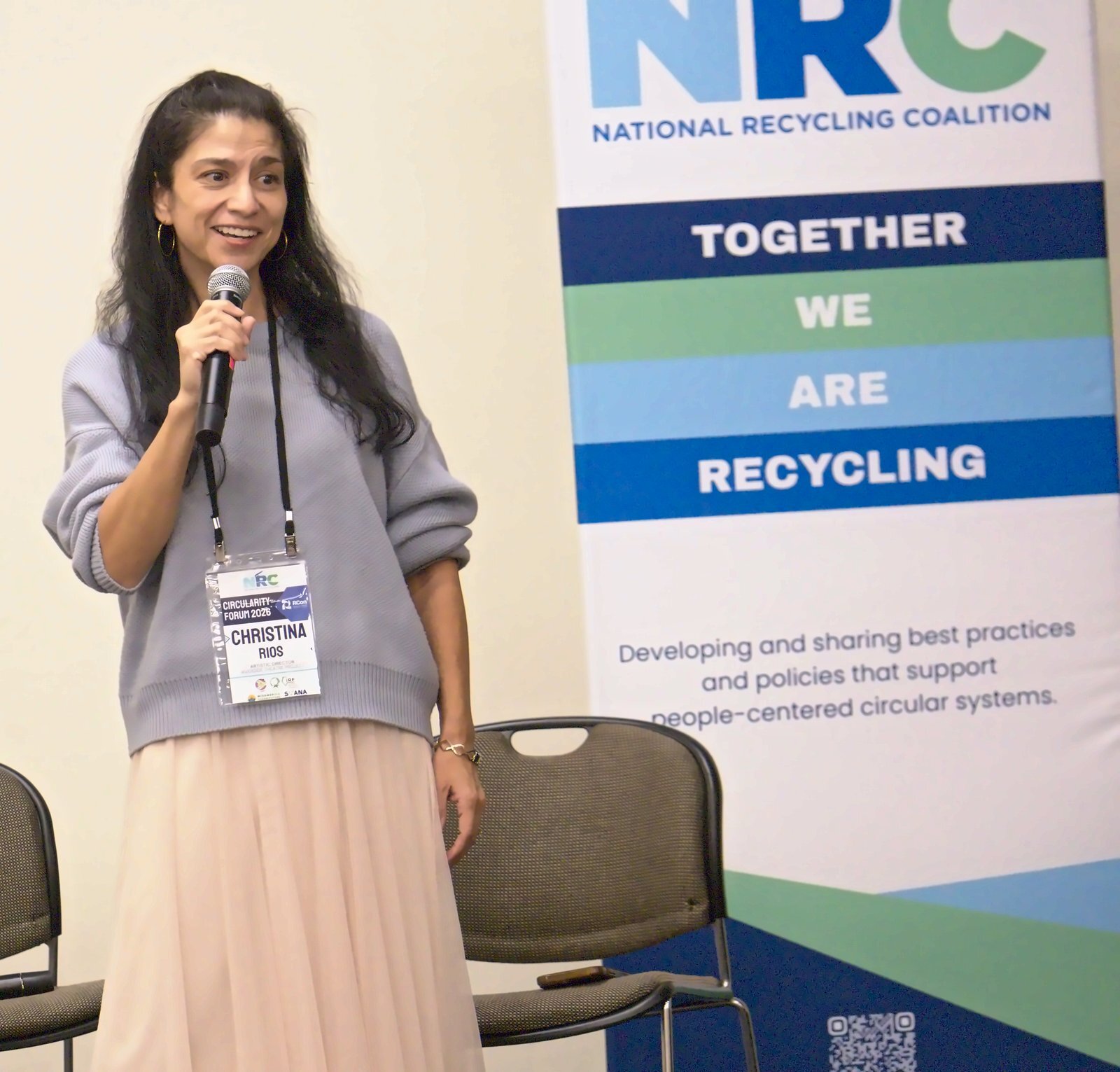
Christina Rios, artistic director of the Riverside Theatre Project and co-founder of R-S Theatrics, called theater notoriously wasteful. Stay after closing night at most professional shows, she said, and you’ll see a strike dumpster full of two-by-fours.
Riverside has joined several professional and youth companies in a pledge to build at least two-thirds of every production from repurposed materials. The fix starts small. Her team timed it: 12 seconds to back out a well-driven screw without damaging it. That 12-second investment saves the lumber for the next show, and her lumber costs are now close to nothing.
“Art is a necessity. It’s not a luxury.”
Her approach is relational, not punitive. “I do believe that people want to do the right thing,” Rios said. “They just don’t often know how to go about doing it.” When she needs a costume in a specific size, she sends one email, and everyone wants to help. “You just have to give them an avenue by which to do so.”
Arts funding is at a low, which makes this a good moment to offer a lifeline. “Art is a necessity,” she said. “It’s not a luxury.” Her prediction: in three years, professional, amateur and high school theater across the region will run as one shared circle.
Radical collaboration, delivered
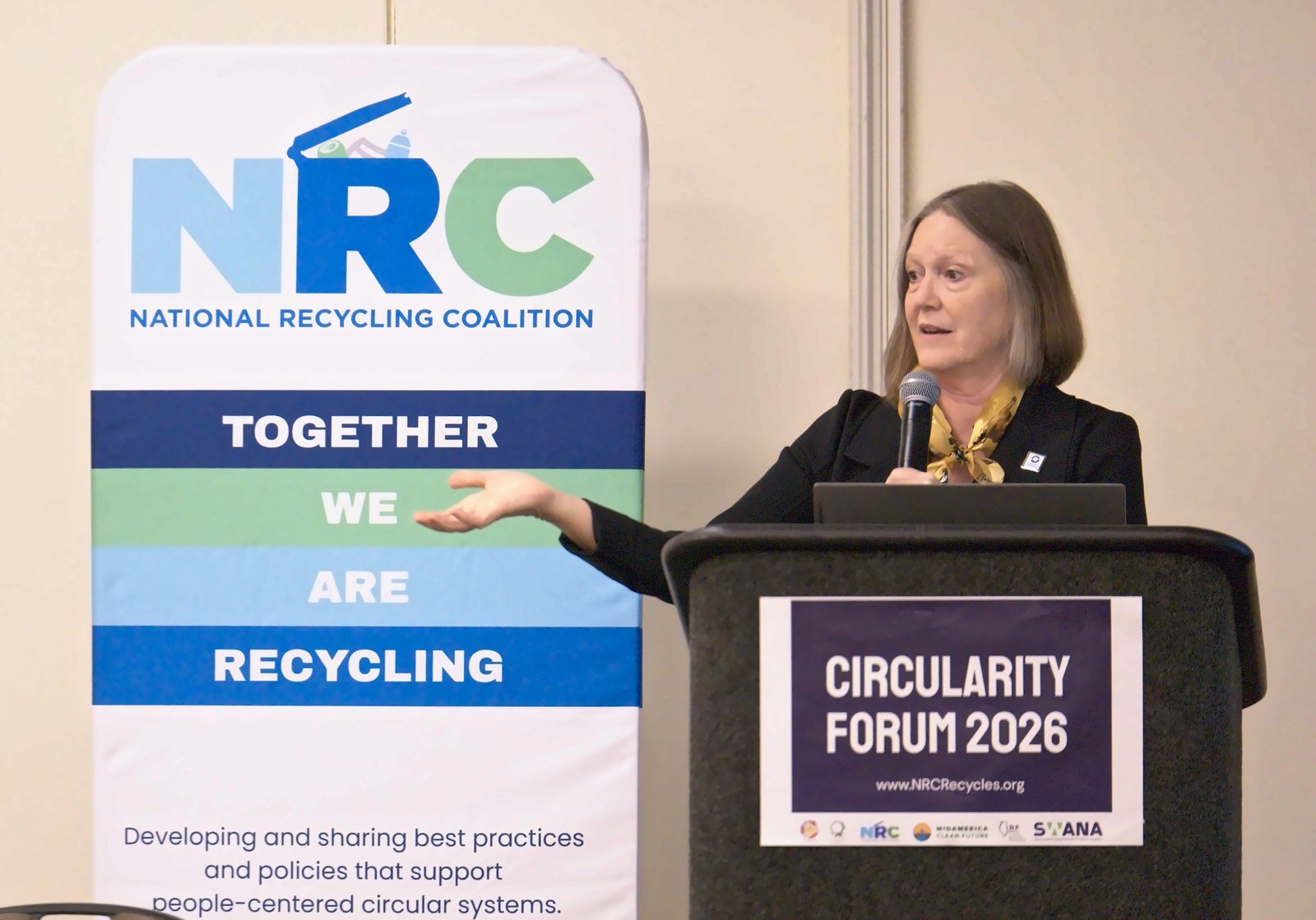
After lunch, Bradley and MACFA’s Jennifer Wendt welcomed the room back for Heidi Sanborn, founder of the National Stewardship Action Council and its education arm, the Stewardship Action Foundation. A colleague calls her “the Godmother of EPR.”
She began with a thank-you that doubled as the day’s thesis. Keynoting NRC’s National Recycling Congress in Wichita last year, Sanborn had challenged the field’s many small nonprofits, each running its own conference of two or three hundred people, to pull together in a time of scarcity. “How do we lock arms and become an army, all going in the same direction?” she had asked.
NRC took up the challenge and partnered with SWANA to bring the Forum to RCon. Sanborn applauded NRC “for actually doing that and leading by example.” Then she named what she wants more of: “Radical collaboration is the way to go.”
Closing the morning’s St. Louis panel, Bradley had made the same point. She credited Sanborn’s Wichita message, which she summed up as “Collaborate, collaborate, collaborate,” for the partnership behind the day: NRC, SWANA, CircularSTL, Race to Zero Waste, MACFA and the Illinois Recycling Foundation. With nonprofit budgets under pressure, she said, partnering is key. “We need to work together if we’re all going to be here next year, or years from now.”
“Radical collaboration is the way to go.”
Then Sanborn turned to her life’s work. Her central image was an overflowing bathtub. What’s the first thing you do? You run for the spigot. “You don’t start mopping,” she said, “but we’re mopping. We’re crazy mad moppers.”
About 80 percent of what comes at the system now is product waste, she said, and design keeps getting worse, from vapes with video displays to singing Mylar balloons she called “flying e-waste.” Producer responsibility matters because producers make the design decisions that set end-of-life costs. When HP began taking back its own laptops, it found the batteries took three different screws to remove. The fix was a pop-out battery. And why don’t we start with source reduction, the top of every waste hierarchy? “Who’s making money by making less? Nobody.”
California keeps moving. Gov. Gavin Newsom just signed two NSAC-cosponsored bills. SB 936 restricts sales of nitrous oxide containers larger than 8 grams while preserving medical, dental, culinary, automotive and industrial uses. SB 501 expands the state’s battery stewardship law to medium-format batteries, including e-bike batteries. Some 34 states now have EPR laws of some kind.
The pushback is real. Seventeen state attorneys general, led by Nebraska, are suing California over EPR. After one lithium-ion battery fire, San Mateo County’s facility was down eight and a half months. “I believe we’re coming really close to becoming an uninsurable industry,” she warned.
Her playbook is practical. Take legislators on study trips: “Not lobbying,” she said. “Just education.” Find unlikely collaborators: her nitrous-oxide bill, co-sponsored with rural counties, Orange County and the San Diego County district attorney, passed both chambers without a single no vote. And lead with money. Her close: be like a bulldog. “Bite and shake,” and don’t let go until you win. The goal is that everything sold on the market has an end-of-life plan.
Local levers, no statehouse required
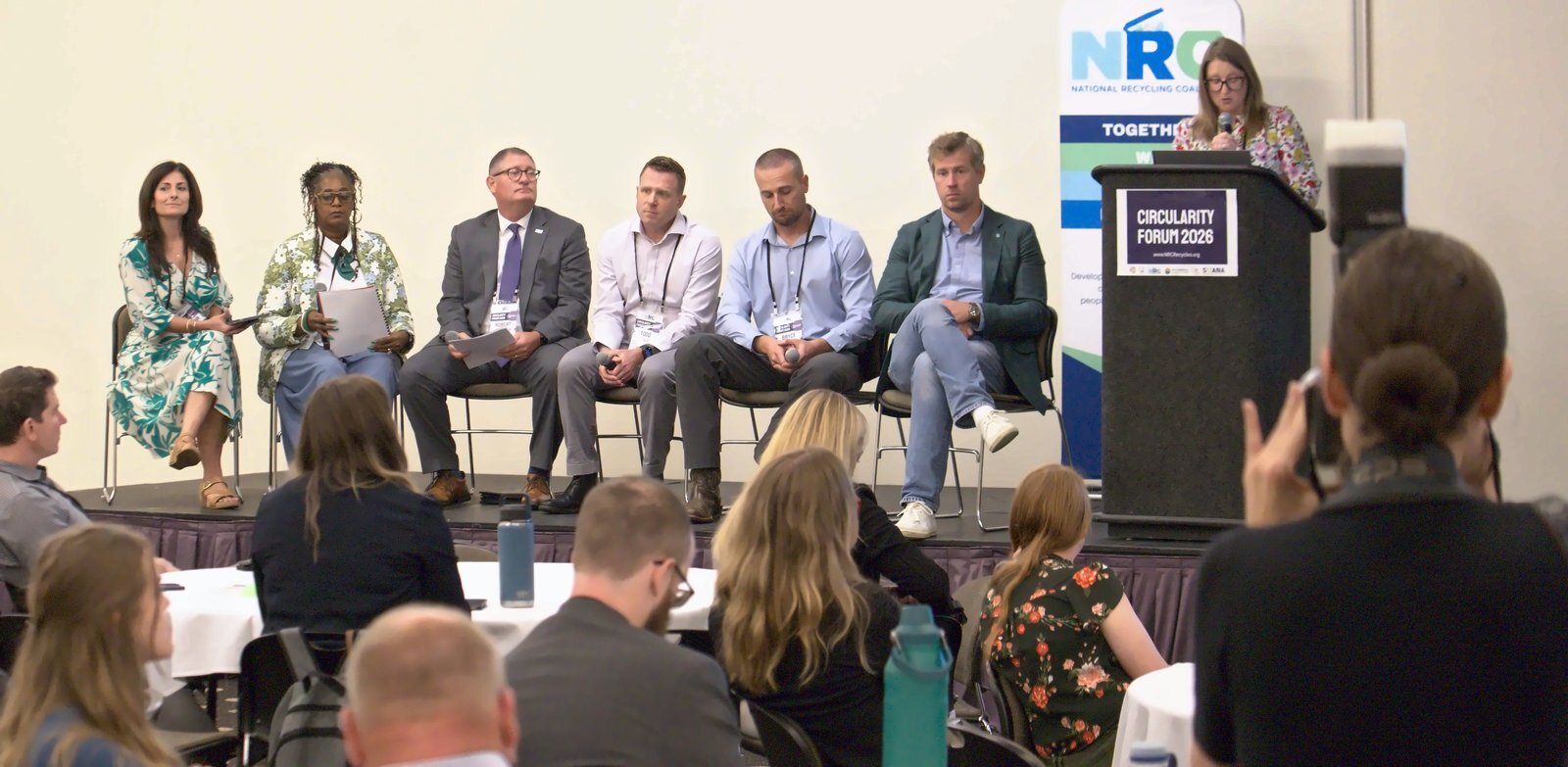
MACFA convened the afternoon, led by executive director Jennifer Wendt, who also leads the Mississippi River Cities & Towns Initiative’s plastic pollution work. The first panel asked what communities can do now, without new state law. The question has an edge in Missouri, where state law preempts some local action.
Dr. Jenna Jambeck, professor of environmental engineering at the University of Georgia, runs the Circularity Informatics Lab, whose free Debris Tracker app has logged more than 10 million items in nearly 100 countries. Communities carry the burden of managing waste, she said, and they deserve a role in redesigning the system.
Todd Rullo, deputy infrastructure director for Thornton, Colorado, described replacing a spring cleanup with a “click and haul” program: residents book a grapple truck online. Nearly every load held a mattress, so Thornton now sends mattresses to a local recycler that hires people returning from prison. Its $30,000 mattress event sold out in three days, and the city council doubled the budget.
Bryce Stalcup, executive director of the Waste Commission of Scott County, Iowa, runs a system that receives zero tax dollars and didn’t shut down when commodity markets collapsed. It budgets on 10-year average prices and banks the good years. “You have to be able to weather the storm,” he said, “and we plan for that.” Its electronics center refurbishes equipment and sells it through an eBay store that tops $1 million a year.
Two mayors brought the river’s story. Bettendorf, Iowa Mayor Bob Gallagher recounted the Mississippi River mayors’ 2019 commitment to cut plastic waste. “Cities and counties are where these solutions either succeed or fail,” he said. Blytheville, Arkansas Mayor Melisa Logan described a city that sent everything to the landfill from 2020 to 2025 after the county facility closed. Now, with MACFA, Blytheville is rebuilding with a shipping container, cash for cans and neighbors joining from both sides of the state line. “We needed to start small and start smart,” Logan said. Her larger point: “We need systems that don’t rely on small cities to solve a national problem.”
Cody Marshall, chief programs officer at The Recycling Partnership, shared its Recycling Confidence Index. Public confidence in recycling slipped between 2022 and early 2026, even as satisfaction with local service rose. His contract advice: put recycling service on par with trash service, avoid ambiguous language, and spell out who is responsible for education. MACFA plans a deeper local-policy convening in early 2027.
Follow the money: the EPR session
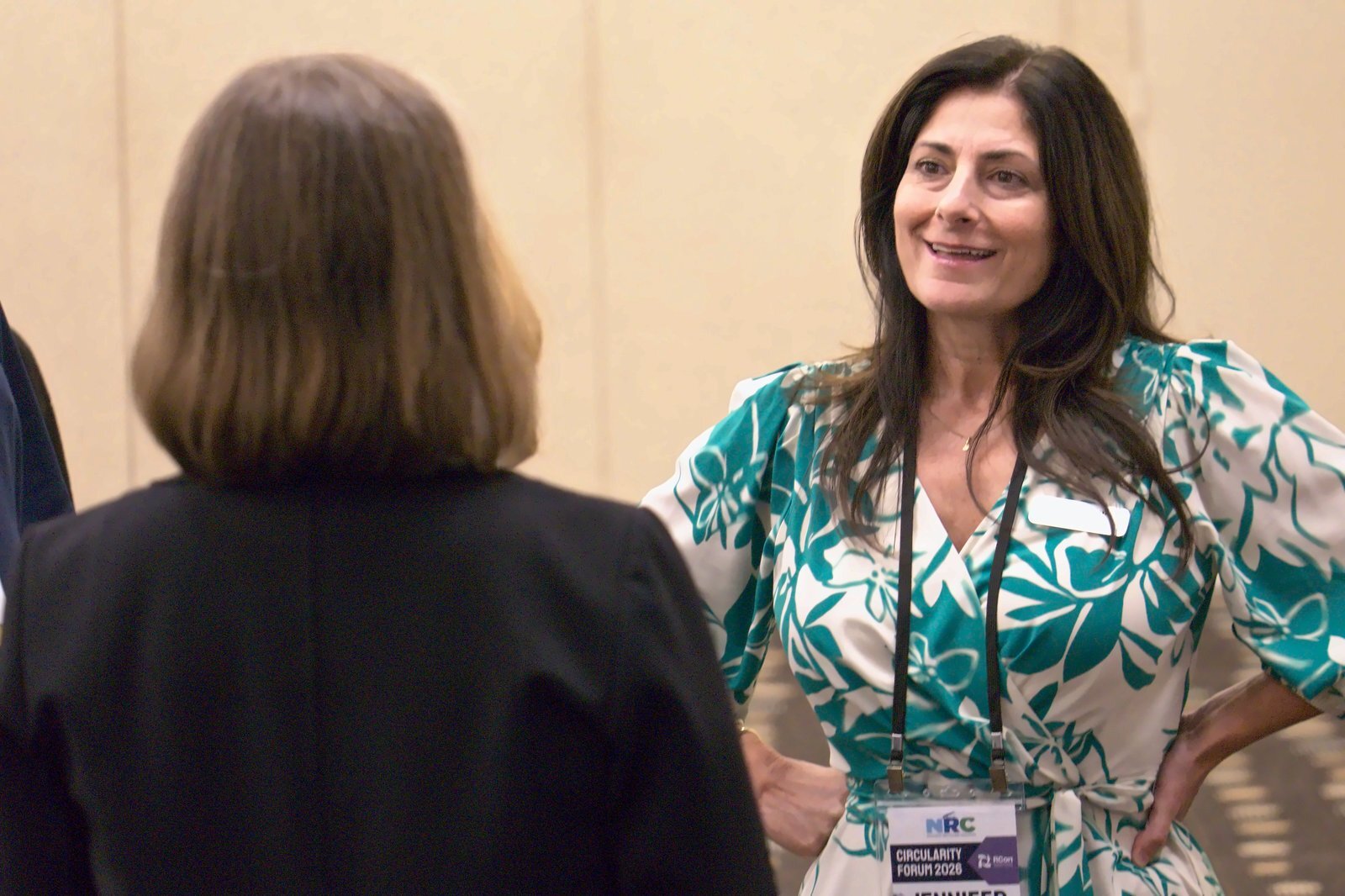
Wendt opened the final session with a reminder. Germany adopted packaging EPR in 1991, so what feels novel here has worked elsewhere for decades. She has been struck, she said, by how many producers want EPR, as long as it’s harmonized.
Rullo came back with news from Colorado, which passed its law in 2022. Thornton was days from signing its agreement with Circular Action Alliance, the state’s producer responsibility organization. The city applied for about $170,000 a year for education and outreach, against its current $15,000. “We’re kind of drinking from a fire hose,” Rullo said. It also applied for about $1.8 million a year for curbside collection, 100 percent passed through to customers. Rullo said Thornton expected to begin a $5 monthly credit for municipal trash and recycling customers in October, pending completion of its agreement. His lesson for other cities: put together a team with finance and legal as soon as applications open. “We learned that the hard way,” he said.
Gallagher returned with the session’s thesis. “Local governments are carrying the weight of a national packaging system that was never designed with us in mind,” he said. When that system breaks, it breaks in neighborhoods, budgets and staff time. “EPR is not just a financial tool,” he said. “It’s a system design tool.”
Marshall mapped the patchwork: seven states have packaging EPR laws, and their definitions and deadlines all vary. Jeff Bezzo, who leads plastic and packaging sustainability at SC Johnson and is board treasurer of Circular Action Alliance, made the producer’s case for harmony through his own products. Professional hand soap is covered in some states and not others. SC Johnson isn’t asking for one-size-fits-all, he said, just harmonized definitions of producer, covered materials and reporting periods. Bezzo said economic modeling from RTI International, just released by SC Johnson and WWF, projects about $9.5 billion in state and local tax revenue over ten years from new recycling infrastructure, plus more than 100,000 jobs.
“Local governments are carrying the weight of a national packaging system that was never designed with us in mind.”
In Q&A, Greenville, Mississippi Mayor Errick Simmons, co-chair of the Mississippi River Cities & Towns Initiative, asked how local leaders can push EPR from the bottom up. The panel’s answer: talk to state and federal legislators directly. “It is way better to hear directly from you,” Marshall said. Bezzo pointed to British Columbia, where Recycle BC reported recovering 78.5 percent of residential packaging and paper in 2025, after more than a decade of EPR. “Give us two or three years as manufacturers,” he said, and brands will redesign to meet clear rules.
When cost to consumers came up, Wendt reframed it. “Right now, we are paying every penny,” she said, through stormwater, utilities and trash bills. “We are already there. We’re way past that.”
After the Forum
By 5 p.m., the conversation moved a short walk away to the National Blues Museum for MACFA’s Circularity Social. On the way out, attendees dropped their badge holders into a basket. The Illinois Recycling Foundation had loaned them, and they’ll be used again.
Butler had asked what it would look like if everyone who wanted to do the right thing actually could. The day answered in pieces. Make the right thing the default, as Ruckman insists. Give people an avenue, as Rios does. Start small and smart, as Logan is doing in the Delta. Plan for the bad years, as Scott County does. And, as Sanborn put it, turn off the spigot.
The Forum itself was an answer to Sanborn’s Wichita challenge. Six organizations put their muscle behind a single day, and MACFA’s early-2027 convening will pick up where the afternoon left off.
NRC thanks SWANA for the invitation and the stage, and every speaker, panelist, moderator and attendee for contributing to the September 28, 2026 Circularity Forum.